If you’ve been baking bread for a while, you’ve probably heard bakers throw around words like poolish, biga, and sponge as if they’re discussing secret wizard spells passed down through generations of flour-covered monks.
To the uninitiated, it sounds complicated.
To experienced bakers, it sounds like Tuesday.
The truth is that preferments are one of the easiest ways to improve your bread. They add flavor, improve texture, strengthen dough, and make people think you know what you’re doing.
Which, let’s be honest, is at least half the fun.
So let’s dive into the wonderful world of bread preferments and figure out which one deserves a spot in your next loaf.
What Is a Bread Preferment?
A preferment is simply a portion of your flour, water, and yeast mixed together before the final dough.
Think of it as giving your bread a head start.
Instead of throwing all your ingredients together and hoping for the best, you’re allowing part of the dough to ferment ahead of time.
This extra fermentation develops flavor compounds, improves dough structure, and generally makes your bread taste like it came from a bakery instead of a hurried Tuesday evening experiment.
It’s the bread equivalent of marinating meat before barbecue.
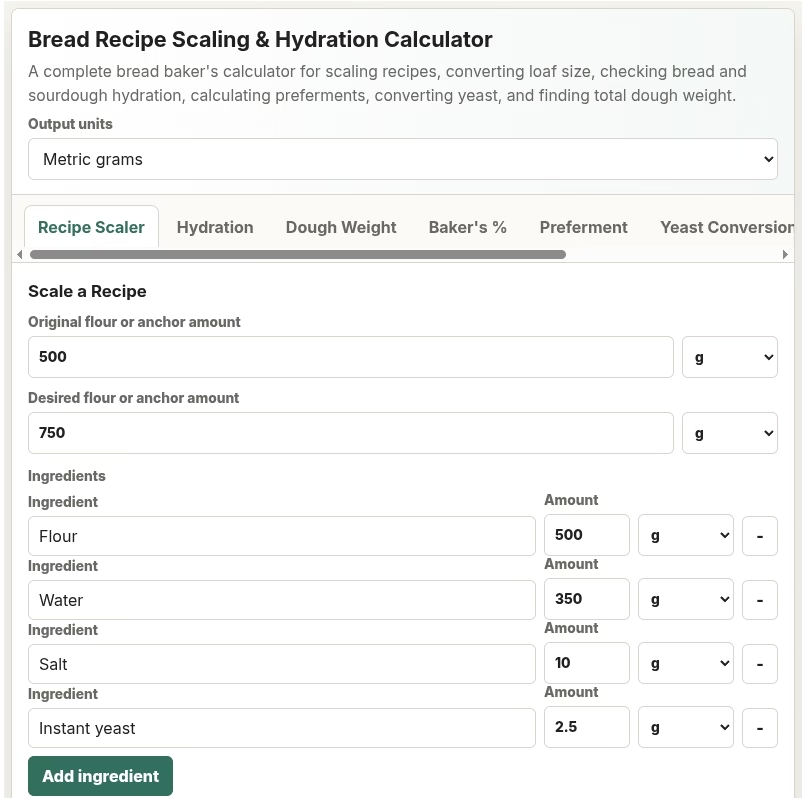
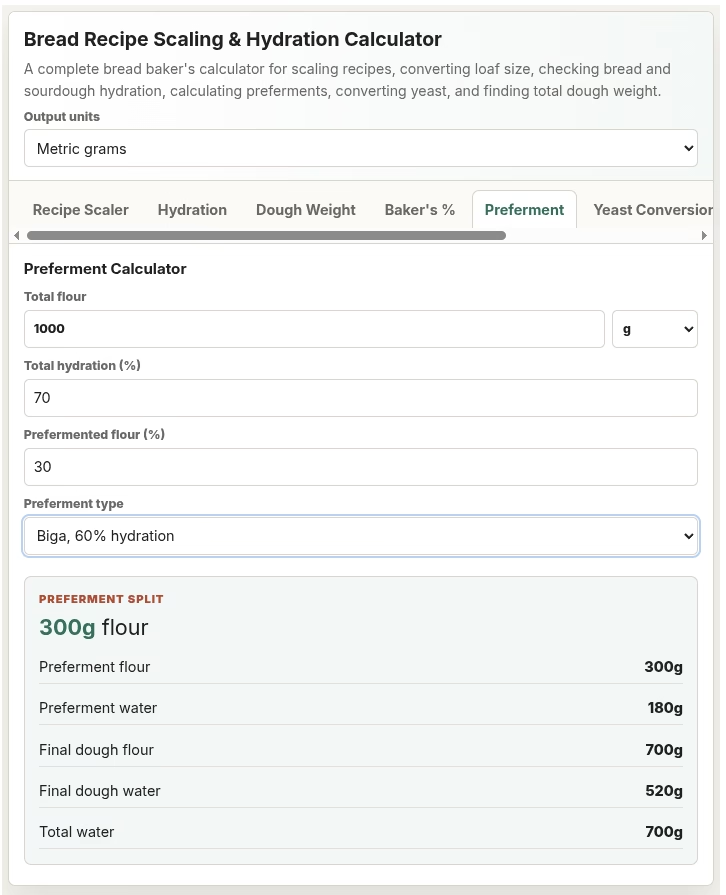
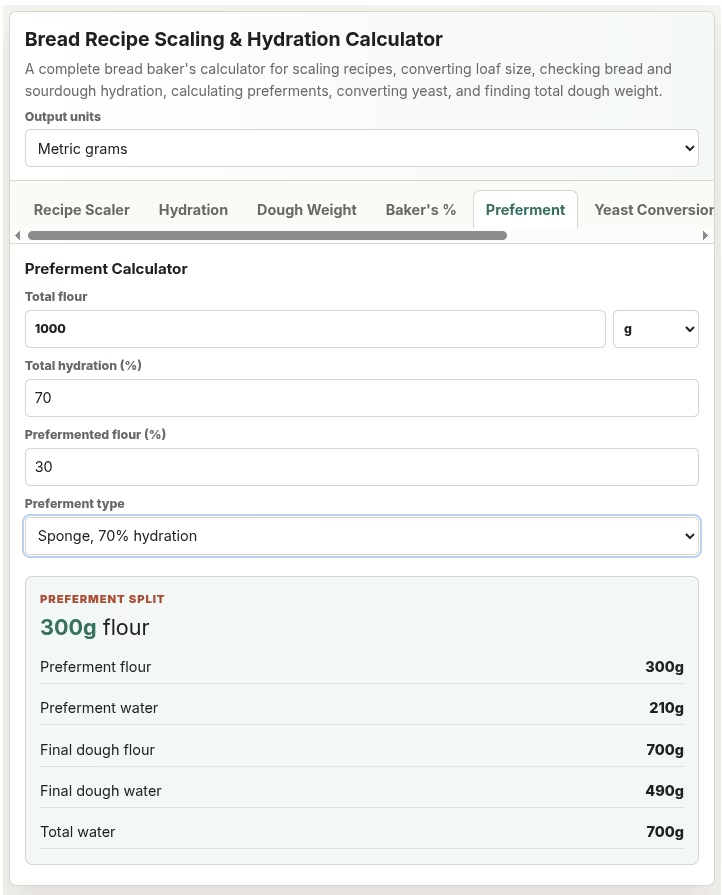
Fortunately, you don’t need a spreadsheet or a degree in advanced flour mathematics. Bread Toolbox can calculate preferments automatically.
Could you skip it?
Sure.
Should you?
Well, that’s between you and your taste buds.
Meet the Preferment Family
Every family has different personalities.
Preferments are no different.
Poolish is the relaxed French cousin.
Biga is the hardworking Italian uncle.
Sponge is the practical middle child that quietly gets things done.
Let’s meet them individually.
Poolish: The Relaxed French Cousin
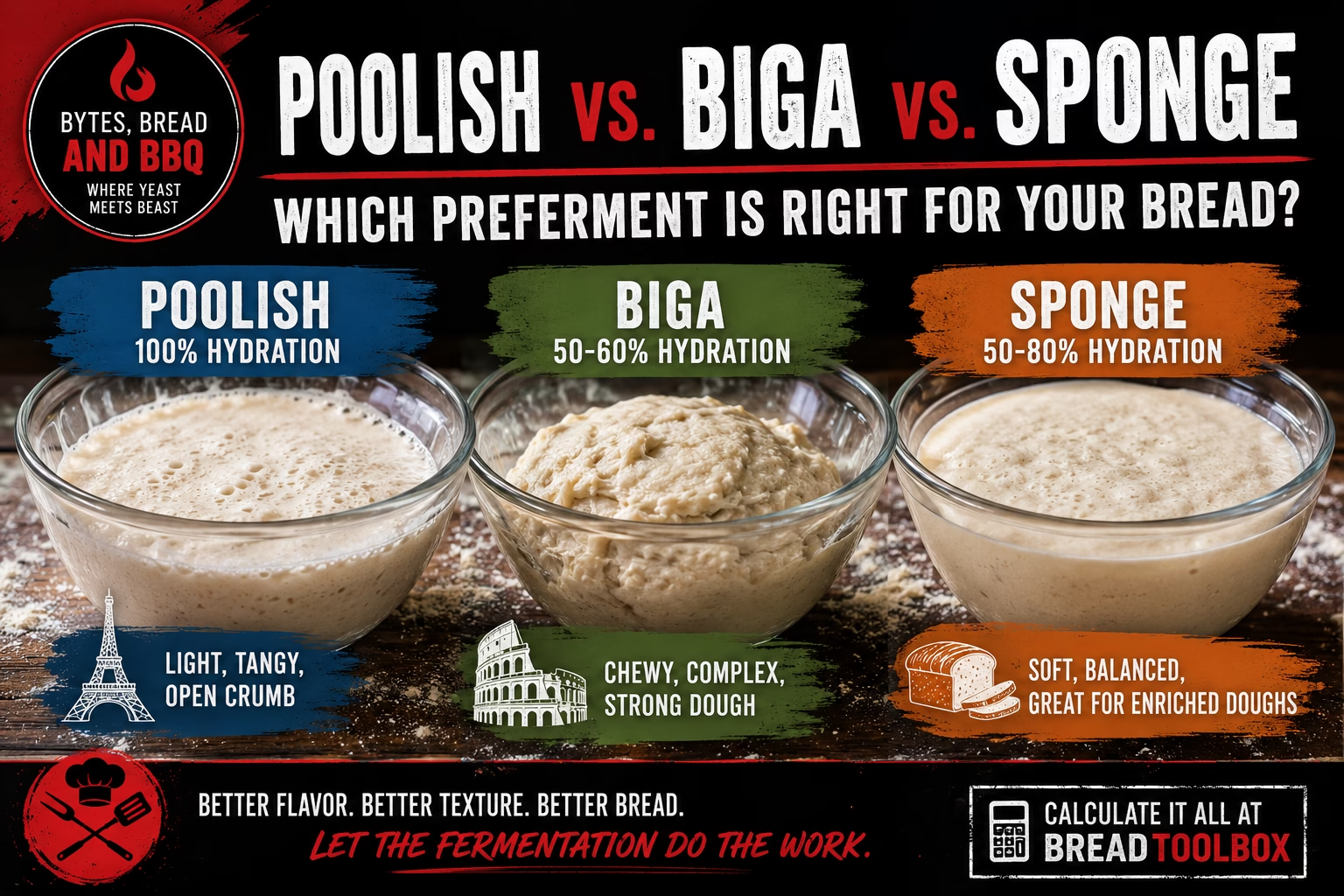
Poolish originated in France and uses equal parts flour and water.
That means it has 100% hydration.
If that sounds technical, don’t worry. It simply means if you use 100 grams of flour, you’ll use 100 grams of water.
The result looks more like pancake batter than dough.
It’s loose.
It’s bubbly.
It’s usually trying to escape its container by morning.
Poolish is fantastic for:
- Baguettes
- Artisan loaves
- Pizza dough
- Rustic breads
What Poolish Brings to the Party
Poolish tends to produce:
- Open crumb structure
- Light texture
- Mild tanginess
- Excellent aroma
If you’ve ever cut into a loaf and admired those big irregular holes that make you feel like an artisan baker on social media, poolish is often responsible.
It’s basically the Instagram influencer of the preferment world.
Biga: The Hardworking Italian Uncle
If poolish is loose and carefree, biga is the guy who shows up fifteen minutes early carrying a toolbox.
Biga originated in Italy and uses much less water than poolish.
Most bigas are around 50-60% hydration.
That creates a stiff dough that feels more like actual bread dough than batter.
A properly mixed biga often looks like it isn’t hydrated enough.
Resist the urge to “fix” it.
Italian bakers have survived this long without our help.
What Biga Brings to the Party
Biga produces:
- Strong dough structure
- Chewy texture
- Complex flavor
- Excellent oven spring
It’s commonly used for:
- Ciabatta
- Rustic Italian breads
- High-hydration artisan doughs
If poolish is the artist, biga is the engineer.
Both are useful.
One simply carries more spreadsheets.
Sponge: The Practical Middle Child
Poor sponge.
Nobody writes songs about sponge.
Nobody posts glamorous sponge photos online.
Yet sponge preferments quietly help produce excellent bread every day.
A sponge typically falls somewhere between poolish and biga in hydration.
It usually ranges from 50% to 80% hydration and often contains all the yeast for the final recipe.
Because of this, sponge preferments ferment quickly and are often ready in just a few hours.
They’re particularly useful in:
- Sandwich bread
- Dinner rolls
- Sweet doughs
- Enriched breads
What Sponge Brings to the Party
Sponge helps create:
- Soft texture
- Consistent results
- Strong rise
- Mild flavor development
It may not be flashy, but neither is duct tape, and look how useful that turned out.
The Great Preferment Showdown
| Feature | Poolish | Biga | Sponge |
|---|---|---|---|
| Hydration | 100% | 50-60% | 50-80% |
| Texture | Batter-like | Stiff dough | Soft dough |
| Origin | France | Italy | Various |
| Flavor | Mild tangy | Nutty and complex | Mild and balanced |
| Best For | Baguettes, artisan bread | Ciabatta, rustic loaves | Sandwich and enriched breads |
| Difficulty | Easy | Easy | Easy |
The good news?
None of these require a culinary degree.
If you can measure flour and avoid accidentally feeding your starter to the dog, you’re qualified.
Which Preferment Should Beginners Use?
For most home bakers, I recommend starting with poolish.
Why?
Because it’s almost impossible to mess up.
Mix equal weights of flour and water, add a tiny bit of yeast, stir, and leave it overnight.
That’s it.
No special techniques.
No secret handshake.
No ancient baking rituals performed under a full moon.
Just flour, water, yeast, and patience.
Which Preferment Makes the Strongest Dough?
Biga wins this category.
The lower hydration encourages gluten development and creates a dough with excellent strength and elasticity.
When bakers talk about dough having “structure,” this is often what they’re after.
If your dough were applying for a gym membership, it would choose biga.
Which Preferment Makes the Best Sandwich Bread?
Sponge gets the nod here.
Its balanced hydration and fermentation profile work exceptionally well in soft sandwich loaves and enriched doughs.
If your goal is a loaf that disappears under peanut butter and jelly, sponge is an excellent choice.
Let the Calculator Do the Math
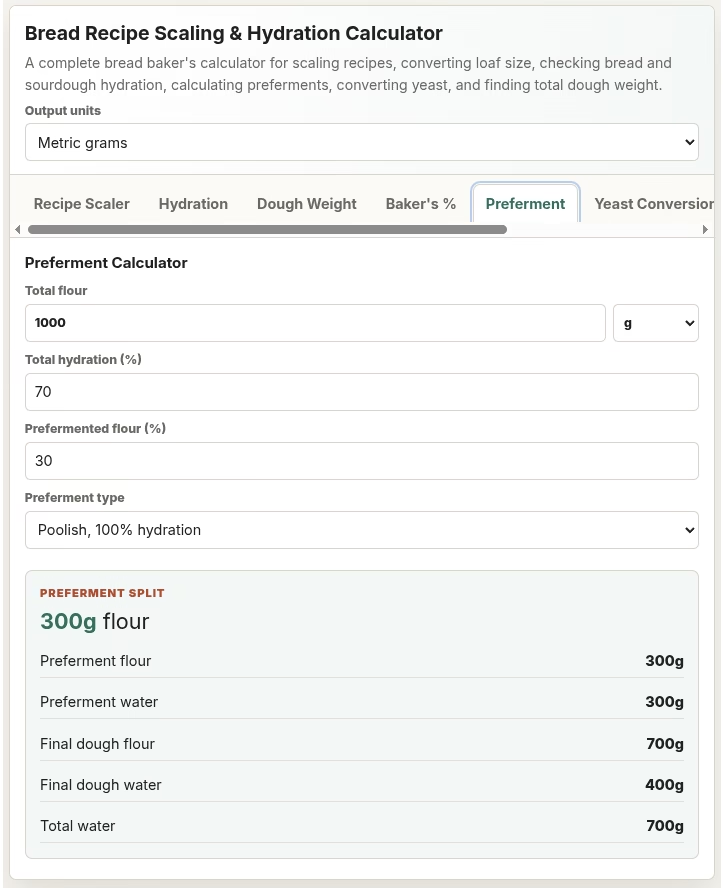
One of the biggest challenges with preferments is figuring out how much flour and water should go into them.
Fortunately, calculators are better at math than most bakers before coffee.
The Bread Toolbox includes calculators for:
- Poolish
- Biga
- Sponge
- Baker’s percentages
- Hydration calculations
- Recipe scaling
- Metric-to-US conversions
Instead of spending twenty minutes staring at a calculator and wondering if you’ve accidentally invented concrete, you can let the software handle the numbers.
That leaves more time for baking.
And eating.
Mostly eating.
Try the free Bread Toolbox Calculator to:
- Calculate Poolish
- Calculate Biga
- Calculate Sponge
- Scale Recipes
- Convert Metric and US Measurements
- Calculate Hydration
Check out more on Bread Preferments here: https://www.bonappetit.com/story/what-is-a-preferment
Final Thoughts
Poolish, biga, and sponge all accomplish the same basic goal: better bread.
The differences come down to flavor, texture, dough strength, and personal preference.
If you’re new to preferments, start with poolish.
If you want stronger dough and rustic character, try biga.
If you’re making sandwich bread or enriched doughs, sponge may become your new best friend.
The beautiful thing about bread baking is that none of these choices are wrong.
They’re simply different paths to a loaf that smells amazing, tastes incredible, and somehow disappears much faster than you expected.
And if all else fails?
Add butter.
Nobody has ever complained about more butter.
Happy baking from Bytes, Bread, and Barbecue—where fermentation is encouraged and carbs are considered a perfectly reasonable life choice.