If you’ve ever followed a bread recipe and thought:
“Why does this dough feel like Play-Doh?”
or
“Why is this dough trying to become one with my countertop?”
The answer is often hydration.
Hydration is one of the most important numbers in bread baking, yet it’s also one of the most misunderstood. A small change in hydration can completely change how your dough feels, handles, rises, and ultimately how your finished loaf looks and tastes.
Let’s break it down.
What Is Bread Hydration?
Hydration is simply the amount of water in your dough compared to the amount of flour.
Bread bakers express hydration as a percentage using this formula:
Water ÷ Flour × 100 = Hydration %
For example:
- 500g flour
- 300g water
300 ÷ 500 × 100 = 60% hydration
That means the dough contains water equal to 60% of the flour weight.
Simple math.
Of course, when you’re covered in flour and trying not to drop your phone into a mixing bowl, simple math suddenly becomes much less simple.
That’s exactly why I built the Bread Toolbox calculator.
👉 Try the Bread Toolbox Hydration Calculator here:
What Does Hydration Actually Change?
Hydration affects nearly everything about your bread:
- How sticky the dough feels
- How easy it is to knead
- How much the dough spreads
- Crumb structure
- Crust texture
- Oven spring
- Overall flavor development
In general:
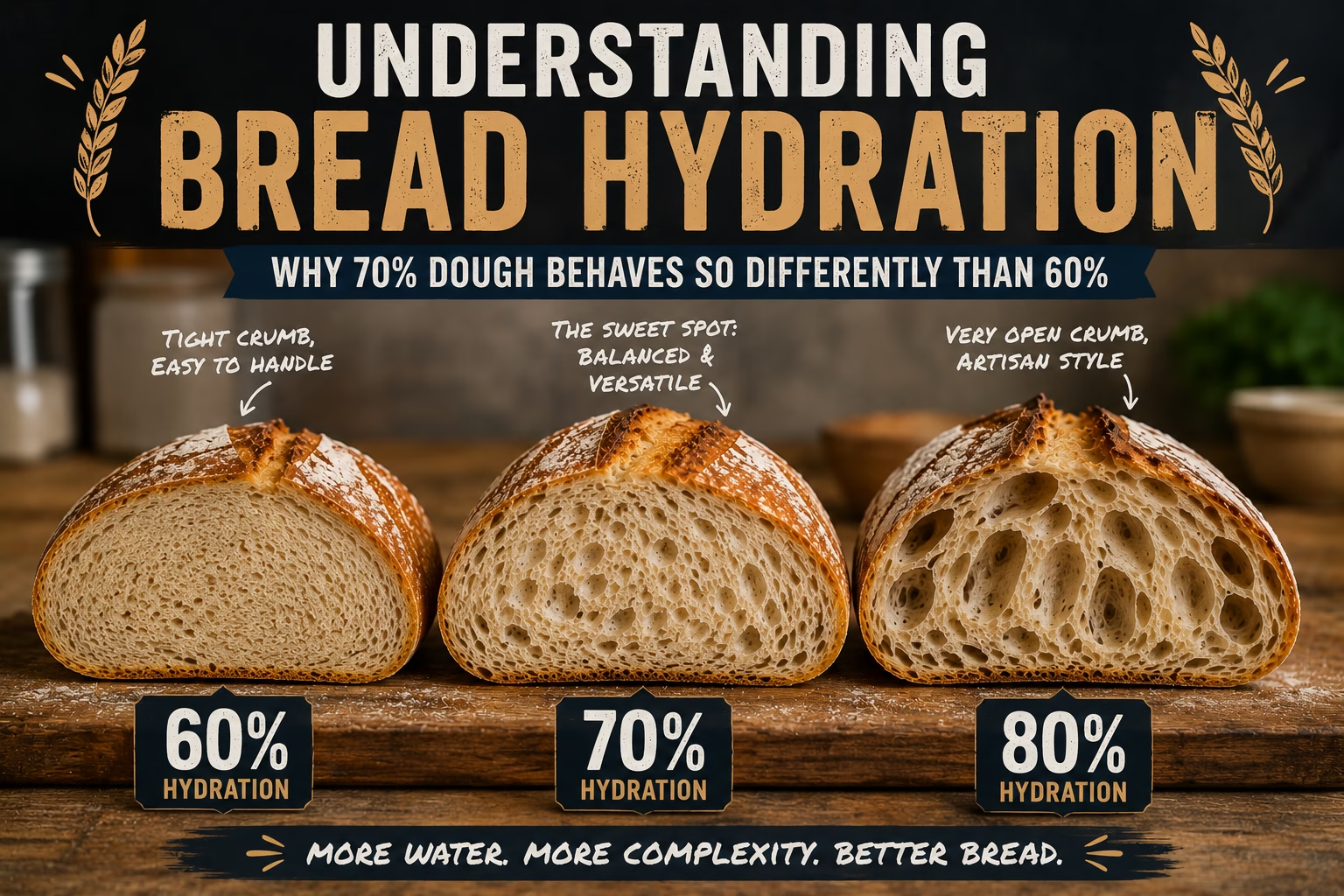
Lower hydration = easier handling
Higher hydration = more open crumb and artisan-style bread
The trick is finding the right balance for the type of bread you’re making.
60% Hydration: The Beginner-Friendly Dough
A 60% hydration dough is usually:
- Firm
- Easy to shape
- Easy to knead
- Less sticky
This is the hydration range found in many sandwich breads and beginner recipes.
Example
- Flour: 500g
- Water: 300g
Hydration:
60%
When you touch this dough, it generally behaves itself.
It’s like the reliable friend who arrives on time and helps you move furniture.
Crumb Characteristics
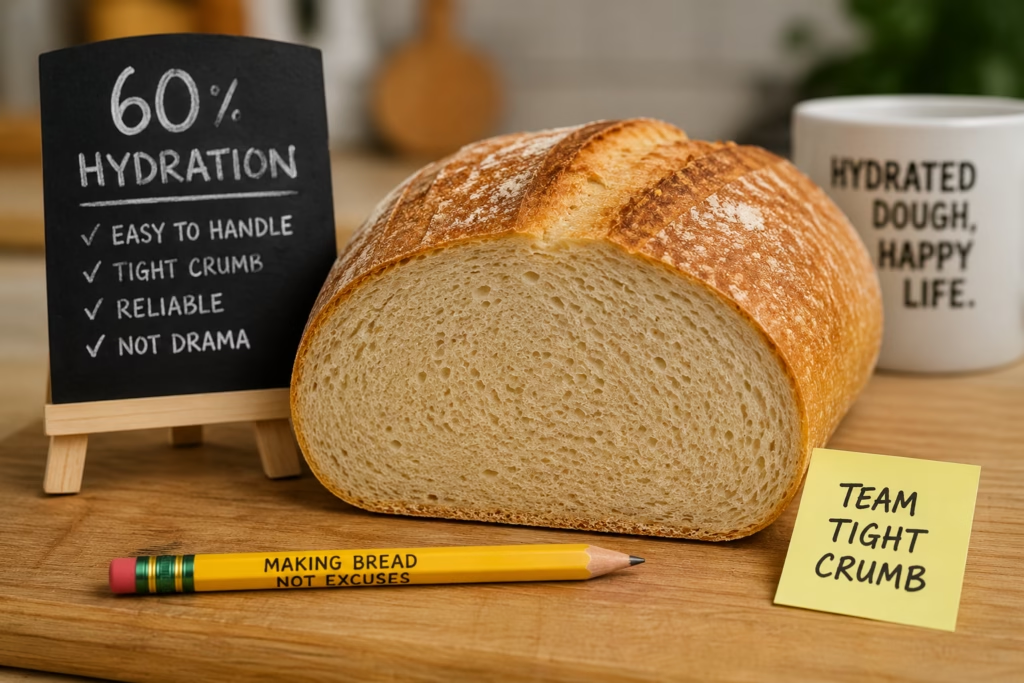
Typical 60% hydration loaf with a tighter crumb structure.
You’ll usually see:
- Smaller holes
- Uniform crumb
- Excellent sandwich slices
- Easier shaping
70% Hydration: The Sweet Spot
Many artisan bread recipes live in the 68%–72% hydration range.
Example
- Flour: 500g
- Water: 350g
Hydration:
70%
Now things get interesting.
The dough becomes noticeably softer and stickier.
This is where many bakers first discover stretch-and-fold techniques and begin muttering things under their breath while trying to shape dough.
Crumb Characteristics
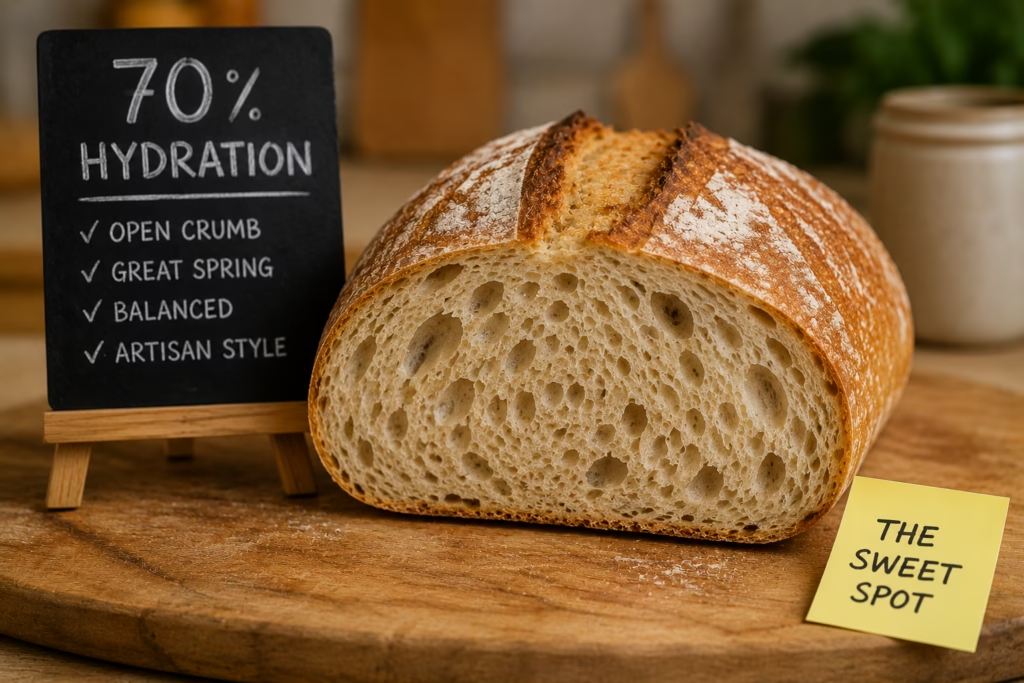
Typical 70% hydration loaf showing a more open crumb and larger air pockets.
Benefits:
- Better oven spring
- More open crumb
- Improved texture
- Great balance between handling and results
For many home bakers, 70% hydration is the “Goldilocks zone.”
Not too stiff.
Not too sticky.
Just right.
80% Hydration: Welcome to the Deep End
An 80% hydration dough can produce stunning artisan bread.
It can also produce stunning frustration.
Example
- Flour: 500g
- Water: 400g
Hydration:
80%
This dough is:
- Very sticky
- Extremely extensible
- Difficult to shape
- Highly dependent on technique
Many first-time bakers assume they’ve made a mistake.
Sometimes they haven’t.
Sometimes they have simply discovered that high-hydration dough behaves more like bread batter with ambitions.
Crumb Characteristics
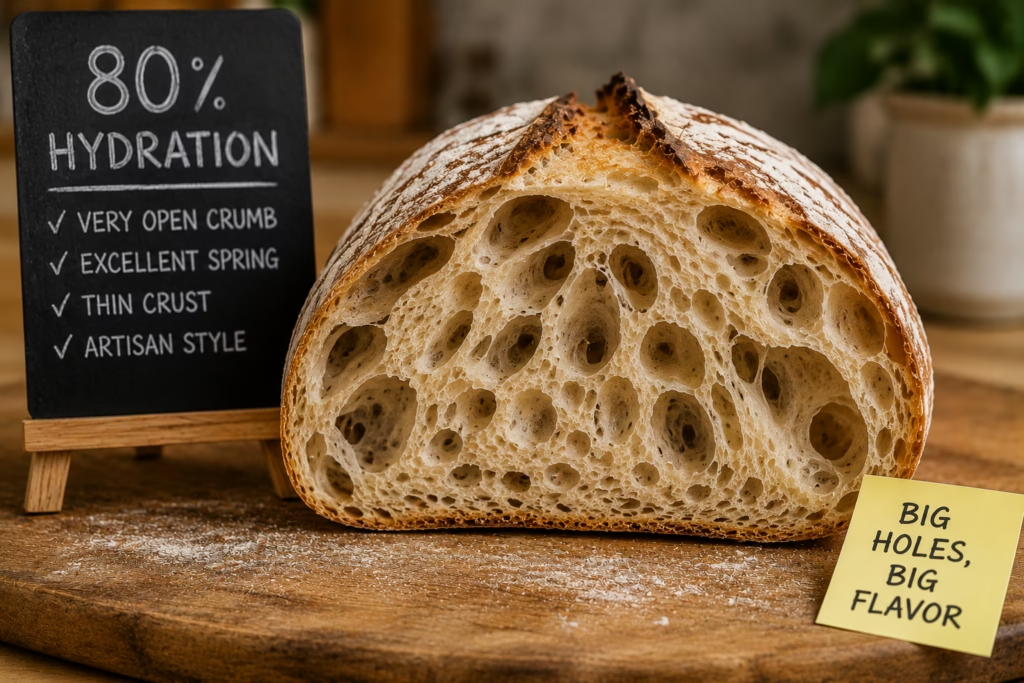
Typical 80% hydration loaf with large, irregular artisan-style holes.
Benefits:
- Extremely open crumb
- Thin crust
- Rustic artisan appearance
- Excellent flavor development
Challenges:
- Difficult shaping
- Requires experience
- More sensitive to flour quality and fermentation
Why Flour Matters
One thing hydration calculators can’t know is how thirsty your flour is.
Different flours absorb different amounts of water.
For example:
- Bread flour usually absorbs more water
- Whole wheat flour absorbs significantly more water
- Some imported artisan flours absorb less water
A dough that feels perfect at 70% with one flour might feel like soup with another.
That’s normal.
The hydration number is your starting point, not a law of nature.
Using Preferments? Hydration Still Matters
If you’re using a poolish, biga, or sponge, hydration becomes even more important because the water in your preferment contributes to your overall dough hydration.
If you want to calculate preferment percentages and hydration accurately, check out my free Poolish Calculator:
👉 https://bytesbreadbbq.com/poolish-calculator/
It helps remove the guesswork so you can spend more time baking and less time searching for calculators that haven’t been updated since dial-up internet.
Calculate Hydration Instantly
If you’re tired of pulling out a calculator every time you adjust a recipe, I built a free Bread Toolbox that includes:
- Hydration Calculator
- Recipe Scaling
- Baker’s Percentages
- Preferment Calculations
- Yeast Conversions
- Dough Weight Calculator
- Metric ↔ US Measurement Conversion
👉 Try it here:
Final Thoughts
The difference between 60% and 70% hydration may only be 50 grams of water in a typical loaf.
Yet those 50 grams can completely transform how your dough behaves.
If your bread seems difficult to shape, too dense, too wet, or wildly different from a recipe video, hydration is one of the first numbers worth checking.
Once you understand hydration, you’ll stop following recipes blindly and start understanding why they work.
And that’s when bread baking becomes a lot more fun.
Even when the dough occasionally decides to fight back.
For more information on Bread Hydration see: King Arthur Flour Bread Hydration