
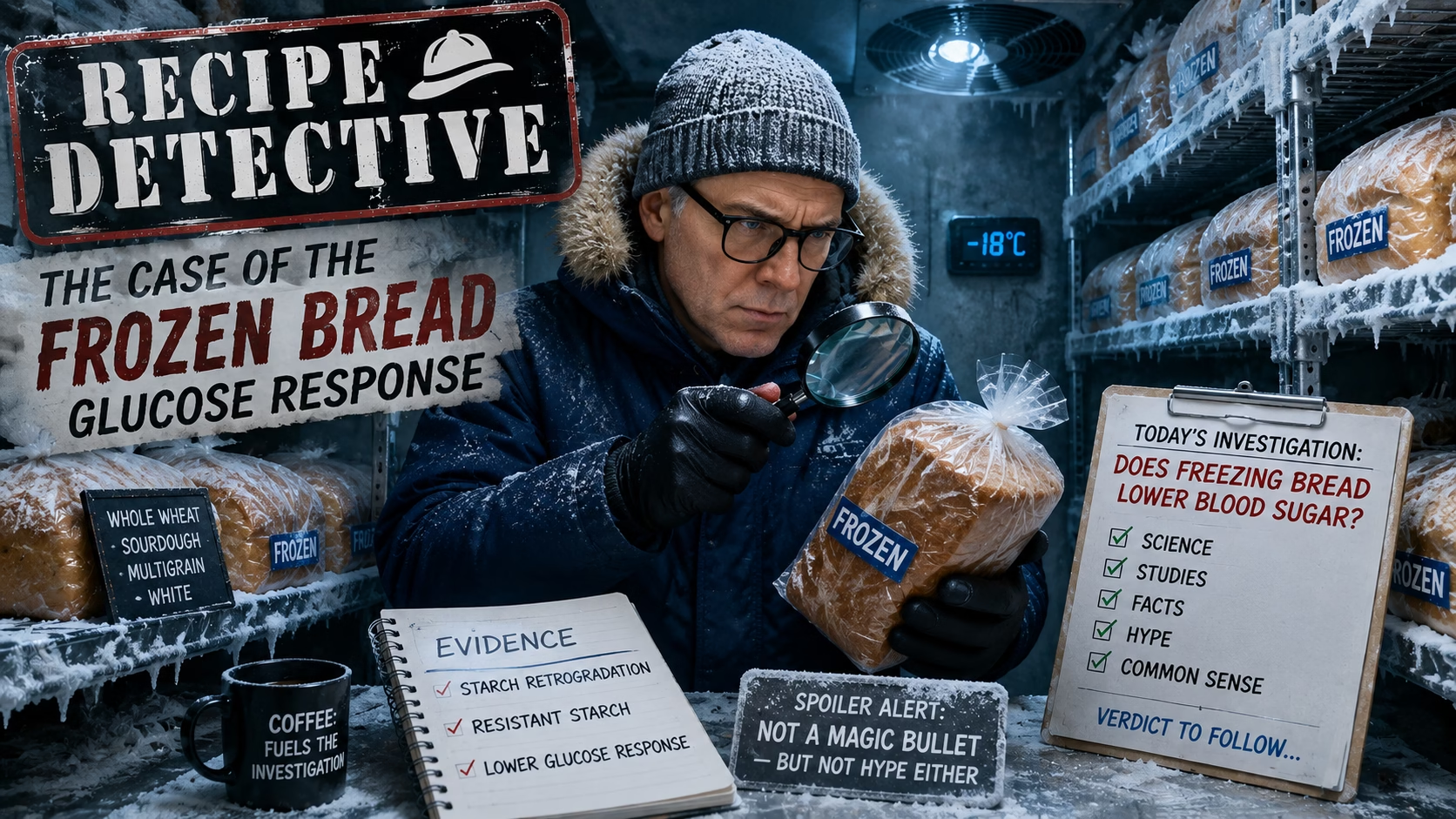
Does Freezing Bread Lower Its Glycemic Impact?
Social media says the freezer can make bread “better” for your blood sugar. This time, the viral claim contains a real crumb of science.Every so often, social media makes a nutrition claim that sounds just plausible enough to be dangerous.
Lately, one of those claims has been making the rounds: freeze your bread and it will have less impact on your blood sugar.
If that were true, it would be useful information for anyone watching blood glucose who would still very much like bread to remain part of civilization.
So at Bytes, Bread, and Barbecue, we did what Recipe Detective does best: ignored the dramatic captions, put on the imaginary trench coat, and went looking for the evidence.
Does freezing bread really reduce the blood-glucose response — or has the Internet once again turned a modest scientific finding into a miracle?
Important: Freezing bread does not replace medical advice, carbohydrate counting, medication, or any instructions from your physician or diabetes-care team. This is a food-preparation effect, not a treatment for diabetes.
Clue #1: What Happens to the Starch?
The basic idea is legitimate. After bread is baked, some of its starch can reorganize as the bread cools. This process is called starch retrogradation.
During retrogradation, some starch molecules realign into structures that digestive enzymes have a harder time breaking apart. Some of that starch behaves as resistant starch — carbohydrate that is less readily digested in the small intestine than ordinary starch.
In practical terms, that can mean glucose from the bread reaches the bloodstream somewhat more slowly or in a smaller post-meal rise.
Notice the words “can” and “somewhat.” We have already left Social Media Miracle Land.
Clue #2: Somebody Actually Tested This
This is the part that surprised me: researchers really did feed people bread prepared in different ways and measure what happened to their blood glucose.
In a study by P. Burton and H. J. Lightowler, published online in 2007 and in the European Journal of Clinical Nutrition in 2008, ten healthy adults ate white bread under different storage and preparation conditions.
The bread was served as:
- fresh bread,
- frozen and then defrosted,
- fresh bread that was toasted, and
- bread that was frozen, defrosted, and then toasted.
Compared with fresh homemade white bread, all three altered preparations produced a lower two-hour blood-glucose response in that small study. The frozen-defrosted-and-toasted homemade bread produced the lowest response of the four preparations.
That is genuine evidence. But there is an important distinction: the investigators measured the glycemic response after eating the bread. It is more precise to say the preparation lowered the glucose response than to claim the freezer magically assigned the bread a brand-new official glycemic-index number.
And there were only ten participants. That is enough to make the result interesting; it is not enough to turn the freezer aisle into a branch of endocrinology.
Clue #3: Does Toasting Matter Too?
Yes. In the Burton and Lightowler study, toasting fresh bread also reduced the measured glucose response, and the combination of freezing, defrosting, and toasting produced a particularly favorable result for the homemade bread.
That makes the viral “freeze your bread” claim more interesting, because the effect does not appear to be a simple on/off switch controlled by the freezer. Storage, cooling, and preparation can all change how starch behaves.
In other words, bread chemistry is apparently determined to make breakfast more complicated than it needs to be.
Clue #4: What About Resistant Starch and the Gut?
Resistant starch is not fully digested in the small intestine. Some reaches the colon, where intestinal bacteria can ferment it. That is one reason resistant starch is often discussed as potentially beneficial for the gut microbiome.
But we should keep the size of the effect in perspective. Freezing a loaf does not transform white bread into a bowl of lentils, a plate of vegetables, or a fiber supplement wearing a crust.
It is still bread. Its total carbohydrate does not vanish. The calories do not flee the loaf in terror when the freezer door closes.
Clue #5: How Do You Do It?
Conway Medical Center reviewed the same general claim in 2026 and offered a practical approach that also makes good sense from a bread-storage standpoint:
The practical version
- Slice the bread before freezing. Then you can take out only what you need.
- Wrap it well or use an airtight freezer container. Resistant starch may be interesting; freezer burn is not.
- Toast the bread when you are ready to eat it.
- Start with the bread that fits your diet in the first place. Freezing does not erase the nutritional differences among breads.
So...Is Frozen Bread “Better for Diabetics”?
This is where Recipe Detective has to arrest the headline before it gets away.
“Freezing bread may modestly reduce the post-meal glucose response” is supported by evidence.
“Diabetics can eat bread without worrying about it if they freeze it first” is not.
The quantity of bread still matters. The type of bread still matters. What you eat with it matters. Your individual glucose response matters. And if you have diabetes, your medical plan matters far more than whether the loaf spent the night next to the frozen peas.
So the social-media version is exaggerated — but, unusually, it is not made out of whole cloth.
Mostly True — With a Much Smaller Loaf of Hype
Freezing bread can change its starch structure, and controlled human research has found a lower post-meal glucose response after certain freezing and toasting preparations compared with fresh white bread.
The effect is real enough to be interesting and modest enough that nobody should mistake it for a free pass on carbohydrates.
If you already freeze bread because you cannot finish a loaf before it goes stale, you may be getting a small metabolic bonus along with better food storage.
Would I deliberately freeze every loaf of homemade bread before eating it?
Now we have reached the truly difficult scientific question.
I bake bread. I know what warm bread smells like when it comes out of the oven. I also know what butter does when it hits that warm slice.
There are limits to what I am willing to sacrifice in the name of starch retrogradation.
My solution? Enjoy the warm slice — and freeze the leftovers.