
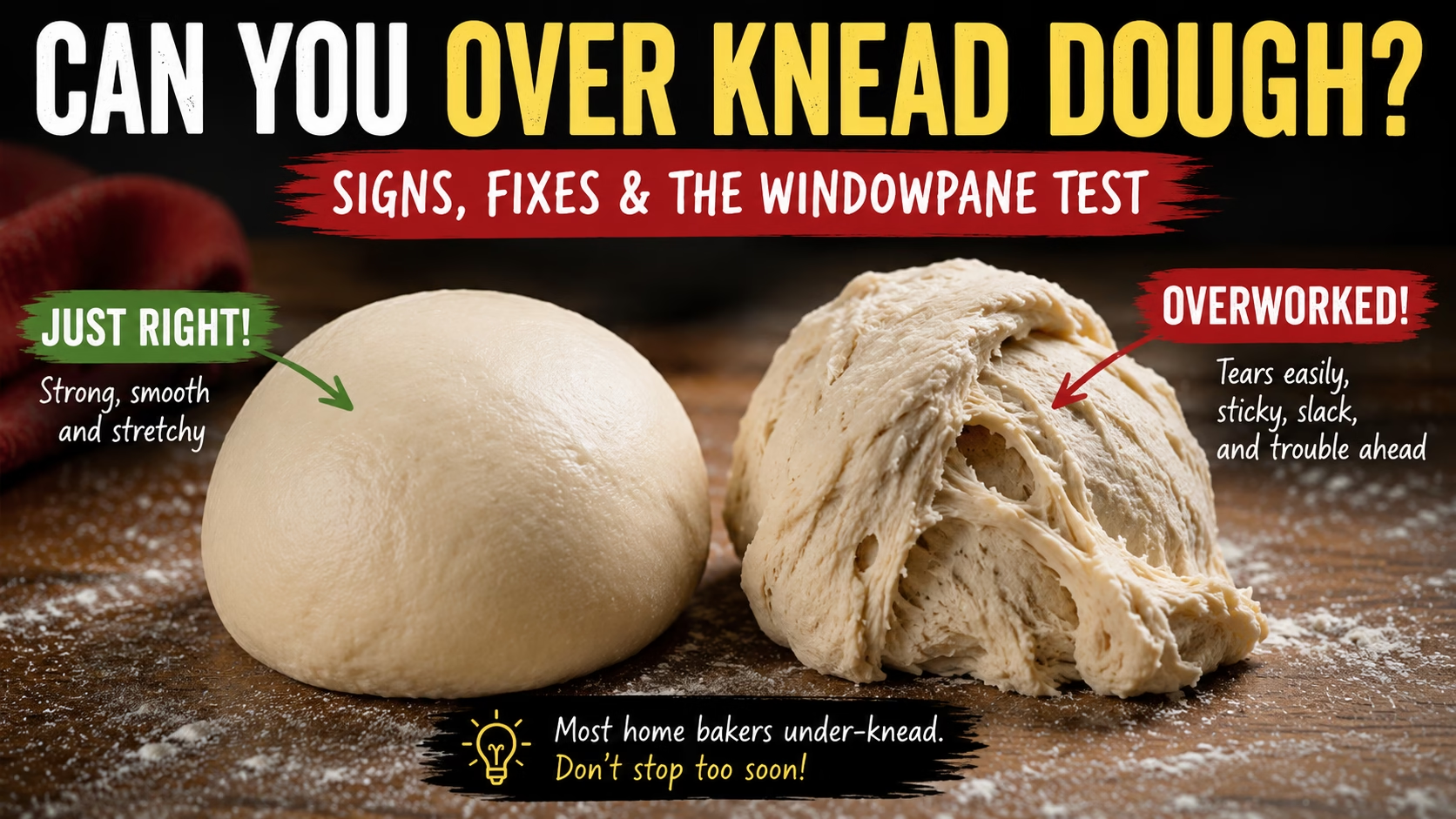
We’ve all been there.
You’re happily kneading away when a tiny voice in the back of your head whispers, “What if I’m ruining this?”
So you stop.
Then you wonder if you stopped too soon.
Then you Google, “Can you over knead dough?” and end up reading seventeen different opinions from people who all seem absolutely certain they’re right.
Let’s clear up the mystery.
The Short Answer
Yes.
The Longer Answer
Yes…but if you’re kneading by hand, you probably aren’t.
Most home bakers quit kneading long before the dough has had enough exercise. If your dough could talk, it would probably be yelling,
“Come on! Is that all you’ve got?”
The real danger of over-kneading usually comes from using a stand mixer, not your own two hands.
What Does Kneading Actually Do?
Kneading isn’t just something bread recipes make you do to burn calories before eating carbohydrates.
When flour and water mix together, two proteins—glutenin and gliadin—combine to form gluten.
As you knead, those proteins organize themselves into long, stretchy strands that create a strong network inside the dough.
Think of gluten like thousands of tiny rubber bands linking together.
That network traps the carbon dioxide produced by yeast, allowing bread to rise and giving it that beautiful chewy texture we all love.
Without enough kneading, the gluten network never fully develops.
Too much kneading, however, can eventually damage that network.
It’s a little like bending a paperclip.
At first it becomes flexible.
Keep bending it over and over…
Eventually it snaps.
Want to understand more about how gluten forms and why kneading matters?
The Institute of Food Science & Technology has a helpful explanation here.
Can You Really Over Knead Dough By Hand?
Technically?
Yes.
Realistically?
Not very often.
Professional bakers have kneaded dough by hand for centuries, and most home bakers simply don’t have the endurance to overwork dough manually.
Your shoulders and forearms will probably surrender long before your dough does.
If anything, under-kneading is far more common than over-kneading.
Stand Mixers Are Another Story
A stand mixer with a dough hook is incredibly efficient.
That’s wonderful…
Until you forget it’s running because you decided to answer an email, switch the laundry, or watch one more bread video on YouTube.
Mechanical mixing develops gluten much faster than hand kneading.
It also creates friction, warming the dough as it mixes.
Eventually the gluten becomes overly tight, begins breaking down, and the dough starts losing the structure you worked so hard to build.
Most bread recipes recommend mixing with a dough hook for about 6–10 minutes on medium speed, but every mixer is different.
The best timer is still your eyes and hands.
Signs You’ve Over Kneaded Dough
1. The Dough Tears Instead of Stretching
Properly developed dough stretches beautifully.
Overworked dough tends to tear instead of stretch.
This becomes obvious when performing the Windowpane Test.
2. It Becomes Sticky…But Not in a Good Way
Many bakers assume sticky dough simply needs more flour.
Sometimes that’s true.
Sometimes it’s exactly the opposite.
As gluten begins breaking down, it can no longer hold onto water efficiently.
The dough becomes slack, sticky, difficult to shape, and generally acts like it has decided to stop cooperating.
3. It Feels Tough
An overworked dough often feels unusually tight and resistant.
Instead of feeling smooth and elastic, it almost fights back every time you try to shape it.
4. The Finished Bread Is Dense
Over-kneaded dough often produces bread with:
- Poor oven spring
- A tight crumb
- An unusually chewy texture
- A flatter loaf than expected
Of course, over-kneading is only one possible cause of dense bread. If your loaf resembles a decorative brick more than a loaf of bread, check out my article, Why Is My Bread Dense?, where I cover several other common culprits.
Can You Fix Over Kneaded Dough?
Maybe.
If the dough simply feels tight and overworked, let it rest for 20 to 60 minutes.
Gluten naturally relaxes over time.
It’s one of the few occasions where doing absolutely nothing is a legitimate baking technique.
Sometimes that’s enough to make the dough easier to shape.
If the dough has progressed to the point where the gluten network has actually broken down, however, there isn’t a magic fix.
Once those protein strands have been damaged, they don’t rebuild themselves.
The Windowpane Test
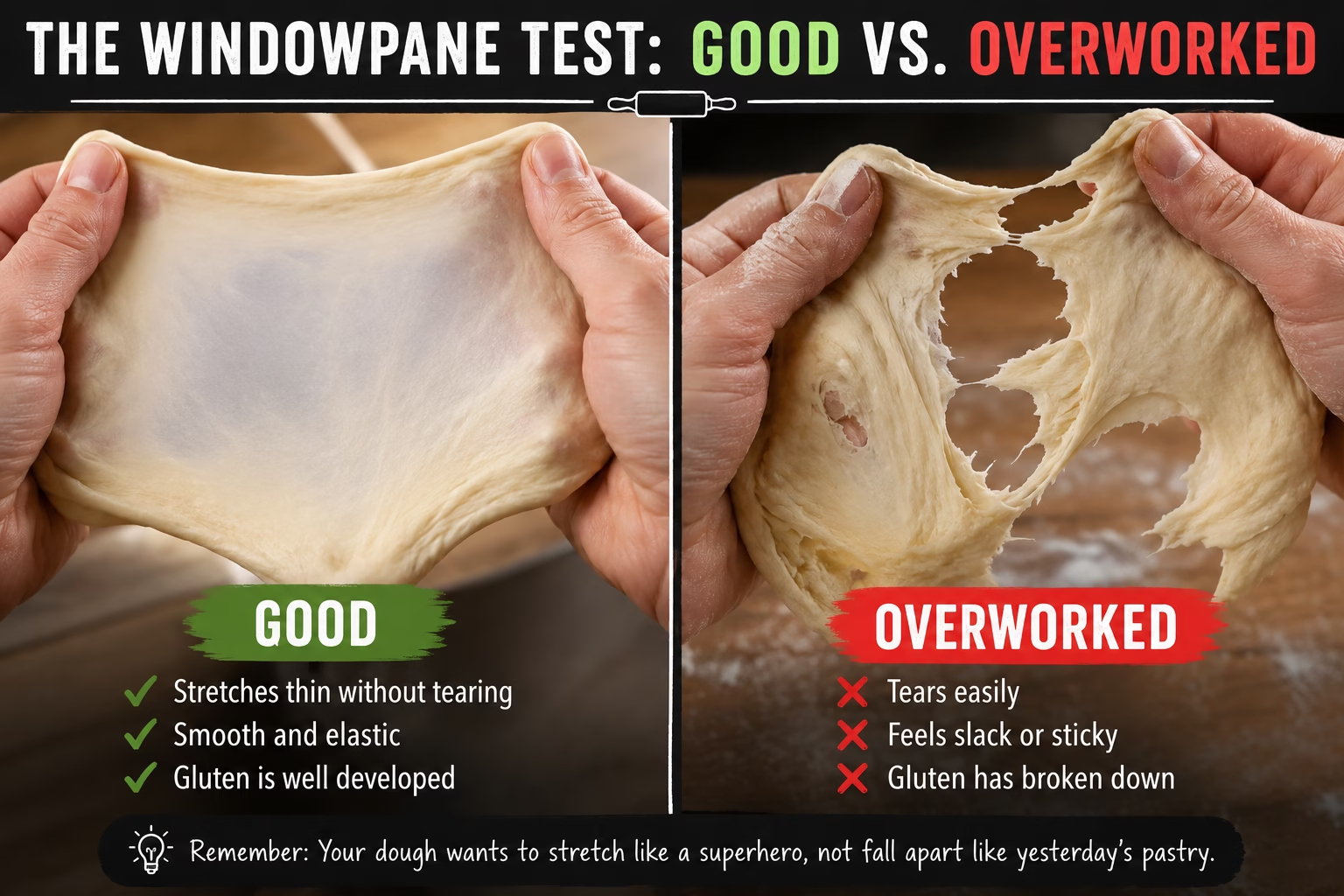
The Windowpane Test remains the easiest way to judge gluten development.
Pinch off a small piece of dough.
Slowly stretch it between your fingers.
If you can stretch it into a thin, translucent membrane without tearing, you’ve developed excellent gluten.
If it tears immediately…
Keep kneading.
If it tears after becoming sticky, slack, and difficult to handle…
You may have gone too far.
The Bigger Problem Is Usually Under Kneading
Here’s the funny part.
Nine times out of ten, when someone tells me,
“I think I over-kneaded my dough…”
they actually didn’t knead it enough.
Beginning bread bakers are often afraid of overworking dough, so they stop long before the gluten has fully developed.
Unless you’ve left your stand mixer running long enough to binge-watch an entire baking show…
You’re probably okay.
Don’t Forget Hydration
Sometimes dough feels sticky simply because it’s a higher hydration recipe—not because you’ve over-kneaded it.
A 75% hydration dough behaves very differently than a 60% hydration dough.
If you’re ever unsure whether your dough is wetter than intended, try my Bread Hydration Calculator. It quickly calculates hydration percentages and can help you determine whether your dough is acting normally or if something else is going on.
Frequently Asked Questions
How long should I knead dough?
Generally:
- By hand: 8–15 minutes
- Stand mixer: 6–10 minutes on medium speed
Always judge the dough—not the clock.
Can a bread machine over knead dough?
Normally, no.
Bread machine cycles are designed to stop before gluten begins breaking down.
Does over kneading kill yeast?
No.
It affects the gluten network, not the yeast itself.
The yeast will continue producing gas, but the damaged gluten won’t hold that gas very well.
Final Thoughts
Can dough be over-kneaded?
Absolutely.
Will you accidentally do it while kneading by hand?
Probably not.
If you’re baking bread at home, there’s a much better chance you’re worrying about a problem you don’t actually have.
So don’t be afraid to knead a little longer.
Your dough can probably handle it.
Your forearms, on the other hand…
…that’s a different story.