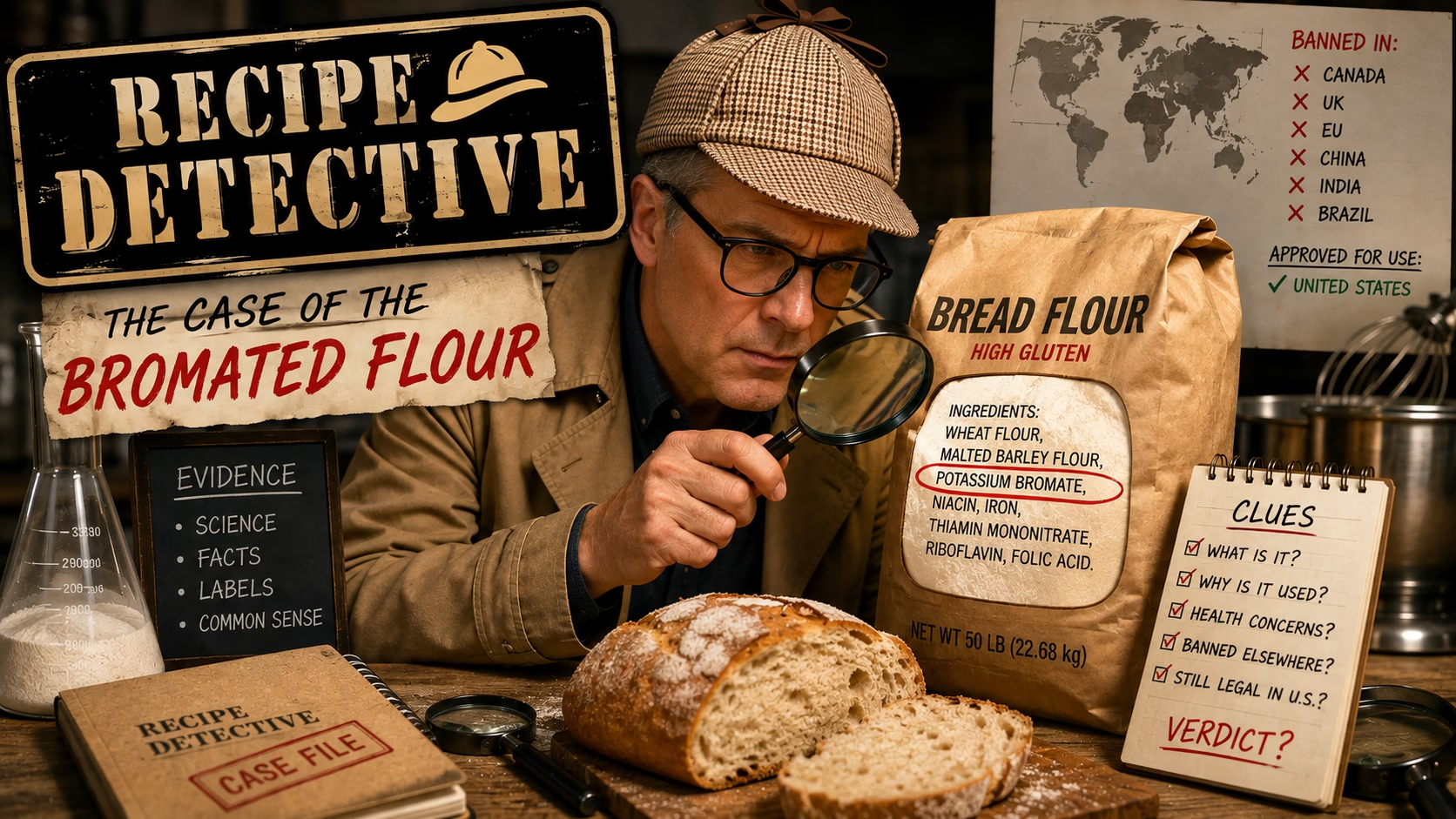
The Case of the Bromated Flour
What is potassium bromate — and why is it in my bread flour?Every good mystery starts with a clue.
Mine was sitting on a shelf at a local farm market.
I wasn't looking for suspicious food additives. I wasn't investigating questionable ingredients. I wasn't even working on a Recipe Detective story.
I was shopping for flour.
There were a couple of bulk flours that caught my attention, including Occident flour from Ardent Mills and a high-gluten flour from General Mills.
As someone who bakes a lot of bread, naturally I was interested.
Good protein levels. Commercial bakery flour. Bulk pricing.
This looked promising.
Then I read the ingredients.
Potassium bromate.
Potassium what?
I'd heard the term bromated flour, but I'd never really thought much about what it meant.
Now I had a clue.
And Recipe Detective had a new case.
Why is potassium bromate added to flour, and should a home bread baker care?
At first I assumed this would be a quick investigation. Look up potassium bromate. Find out what it does. Go back to baking bread.
Instead, I discovered an ingredient that has been used by commercial bakers for decades, remains permitted in the United States, is no longer permitted as a food additive in Canada, and is controversial enough that California has enacted a law prohibiting foods containing it beginning in 2027.
Suddenly my bargain bag of flour was getting considerably more interesting.
Clue #1: What Does Potassium Bromate Actually Do?
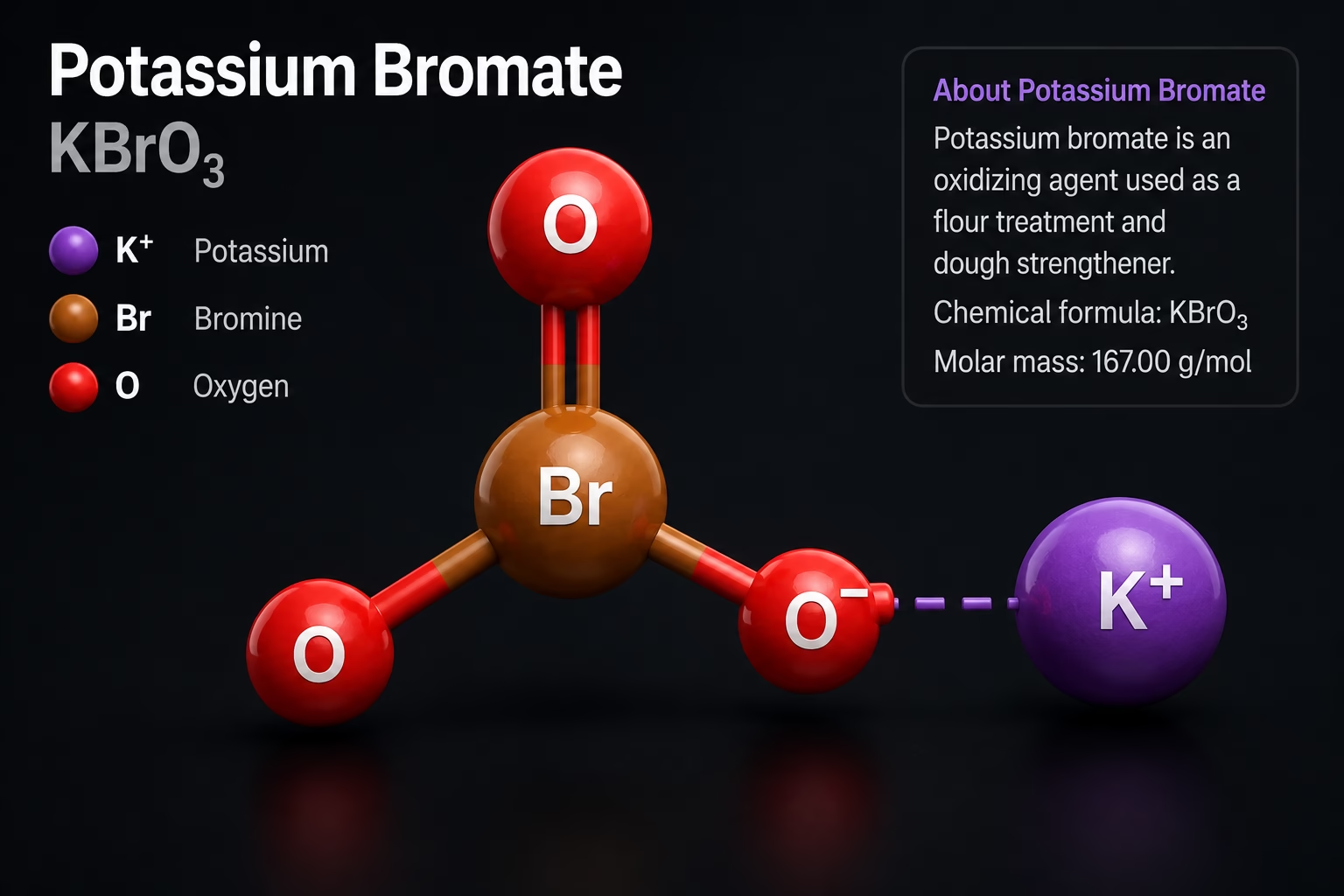
Potassium bromate is an oxidizing agent used as a dough strengthener and flour treatment.
And from a bread-making standpoint, there's a reason bakers have used it.
It strengthens dough and helps improve its tolerance during mixing, fermentation, and baking. That can help commercial bakeries produce consistent volume and texture.
Think about the difference between my kitchen and a commercial bakery.
If one of my loaves comes out a little shorter than yesterday's loaf, I might stare at it for a minute and wonder what I did differently.
Then I'll probably eat it.
A commercial bakery producing thousands of loaves doesn't have that luxury. Consistency matters.
So potassium bromate isn't in flour because somebody decided bread needed another complicated-sounding ingredient.
It actually does something useful.
Clue #2: If It's Useful, Why Have Countries Stopped Permitting It?
This is where the investigation took a turn.
Potassium bromate has raised health concerns because laboratory studies have found that it causes cancer in animals, including kidney tumors.
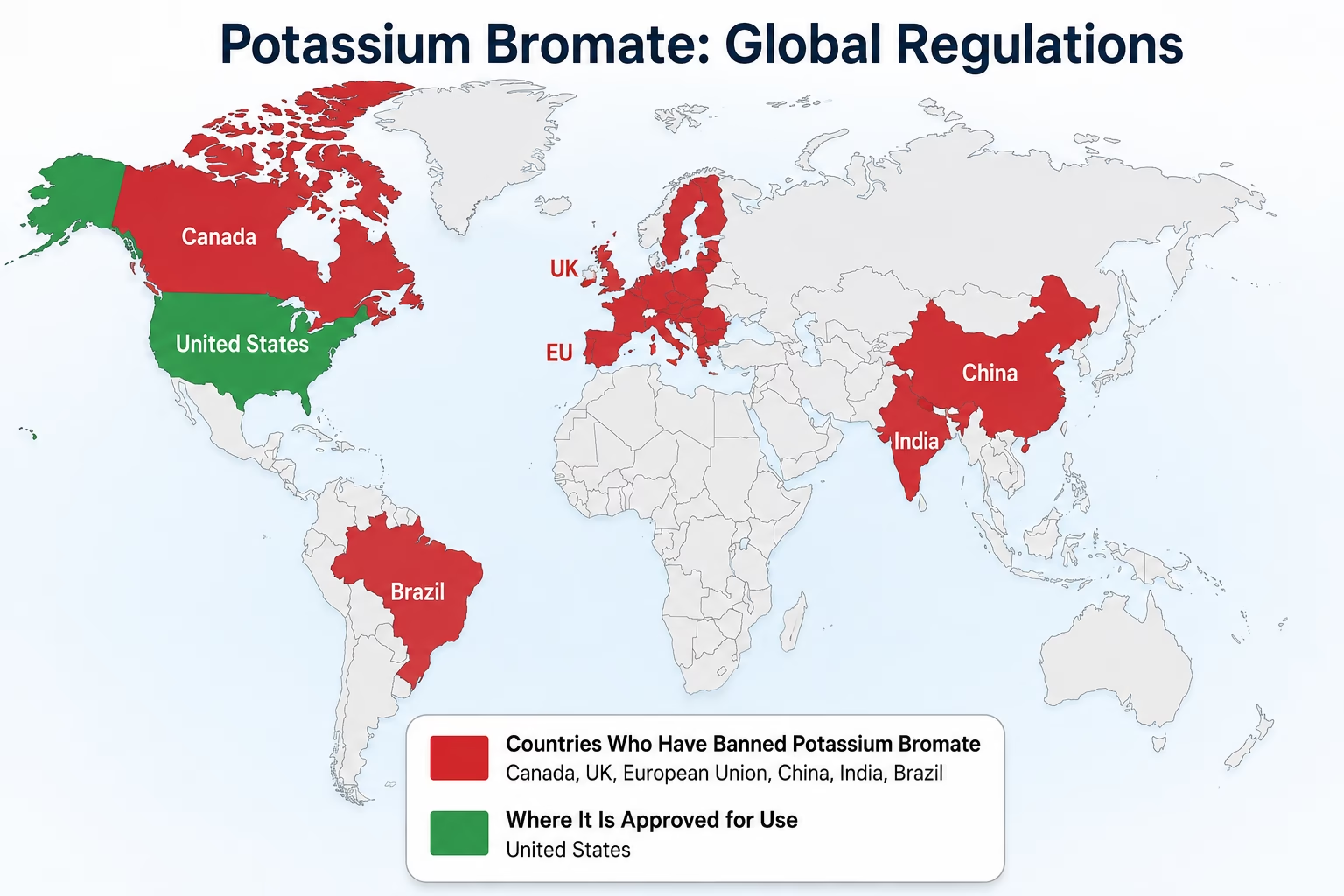
Canada removed potassium bromate from its list of permitted food additives in 1994, and it is no longer permitted in foods sold there. Other countries and regions have also prohibited or restricted its use in food.
Yet here in the United States...
It's still federally permitted in bromated flour.
Cue the Recipe Detective mystery music.
Clue #3: Why Is It Still Used in the United States?
Federal regulations still permit potassium bromate in bromated flour in the United States. The regulation for bromated flour allows potassium bromate at no more than 50 parts per million of the finished flour.
The reasoning behind its traditional use is important.
Potassium bromate is intended to react during dough processing and baking. When used appropriately and the product is properly baked, the goal is to minimize bromate remaining in the finished product.
So this isn't as simple as:
Potassium bromate = poison = dangerous bread.
That's not a fair description of the issue.
The controversy is over whether we need to use it in the first place, particularly when alternatives are available.
And even within the United States, attitudes are changing.
California passed legislation prohibiting foods containing potassium bromate beginning January 1, 2027.
That got my attention.
An ingredient can therefore be federally permitted in the United States while simultaneously being prohibited by an individual state.
Who knew buying flour could turn into a lesson in food regulation?
I just wanted to make a sandwich.
Clue #4: The Flour on the Shelf
Now we return to the scene of the crime.
Or, more accurately, the baking aisle.
The Occident flour caught my attention because it looked like an interesting bread flour.
And it is.
Ardent Mills describes Occident as a short-patent flour made from hard wheat, with a protein level generally around 11.9% to 12.5%. That's right in useful bread-baking territory.
But here's something important I learned during this investigation:
Occident flour isn't necessarily bromated.
Ardent Mills sells different formulations of Occident flour, including untreated and bromated versions.
So it would be incorrect to say, "Occident flour contains potassium bromate."
Some does. Some doesn't.
The particular flour you're considering is what matters.
Which leads us to perhaps the most useful discovery in this entire investigation:
Read the label.
- Bread Flour.
- High Gluten.
- Professional.
- Artisan.
Those words tell us what the manufacturer wants us to notice. The ingredient list tells us what we're actually buying.
Clue #5: Does a Home Baker Need Bromated Flour?
This became the most important question for me.
I'm not operating a commercial bakery.
I don't need 2,000 loaves of bread to come out exactly the same every morning.
I'm making bread at home.
So suppose bromated flour gives me somewhat stronger dough or better tolerance.
What does that really accomplish for me?
There are plenty of excellent unbromated bread flours available. King Arthur, for example, makes a point of selling unbromated flour, and I've already been using quite a bit of their flour anyway.
So I found myself asking:
If I can make excellent bread without potassium bromate, why do I need flour containing it?
And that's when the case started solving itself.
But Is Bromated Flour Dangerous?
Here's where Recipe Detective needs to resist turning into Recipe Clickbait.
I'm not saying that eating a slice of bread made with bromated flour is going to give you cancer.
I'm also not suggesting anyone needs to race into the pantry and throw away every bag of flour.
Potassium bromate remains legally permitted in bromated flour under federal regulations in the United States.
There is a legitimate reason bakers have used it, and the baking process is intended to reduce residual bromate in the finished product.
But there is also enough concern about potassium bromate that Canada no longer permits it as a food additive and California has decided to prohibit foods containing it beginning in 2027.
Those are facts worth considering.
What you do with them is a personal decision.
Case Closed: I'm Buying the Unbromated Flour
- Case: The mysterious ingredient in my bulk bread flour.
- Suspect: Potassium bromate.
- Motive: Strengthen dough, improve tolerance, and help commercial bakers achieve consistent results.
- Evidence: It performs a legitimate baking function, but laboratory animal studies have raised health concerns. Its use has been prohibited or restricted in a number of places, while it remains federally permitted in bromated flour in the United States.
- The question: Do I need it in my home bakery?
My verdict: No.
That's not because I think a bag of bromated flour is going to leap off the shelf and attack me.
It's much simpler.
I can buy excellent unbromated flour. I can make excellent bread with it. And I don't operate a commercial bakery where the production advantages of bromated flour might matter.
So given two bags of flour — one bromated and one unbromated — I'm taking the unbromated one.
Case closed.
One Last Clue...
Before this investigation, I paid attention to flour type and protein percentage.
All-purpose or bread flour?
11.7% protein or 12.7%?
Bleached or unbleached?
Those were the things I looked for.
Now I've added another question:
Bromated or unbromated?
That's probably the real lesson from this Recipe Detective case.
Don't assume flour is just flour.
Turn the bag around. Read the ingredients. Ask questions when you see something you don't recognize.
Because sometimes the most interesting Bread Lab experiment begins before the flour ever reaches the mixing bowl.
Until the next case... keep baking — and keep investigating.