
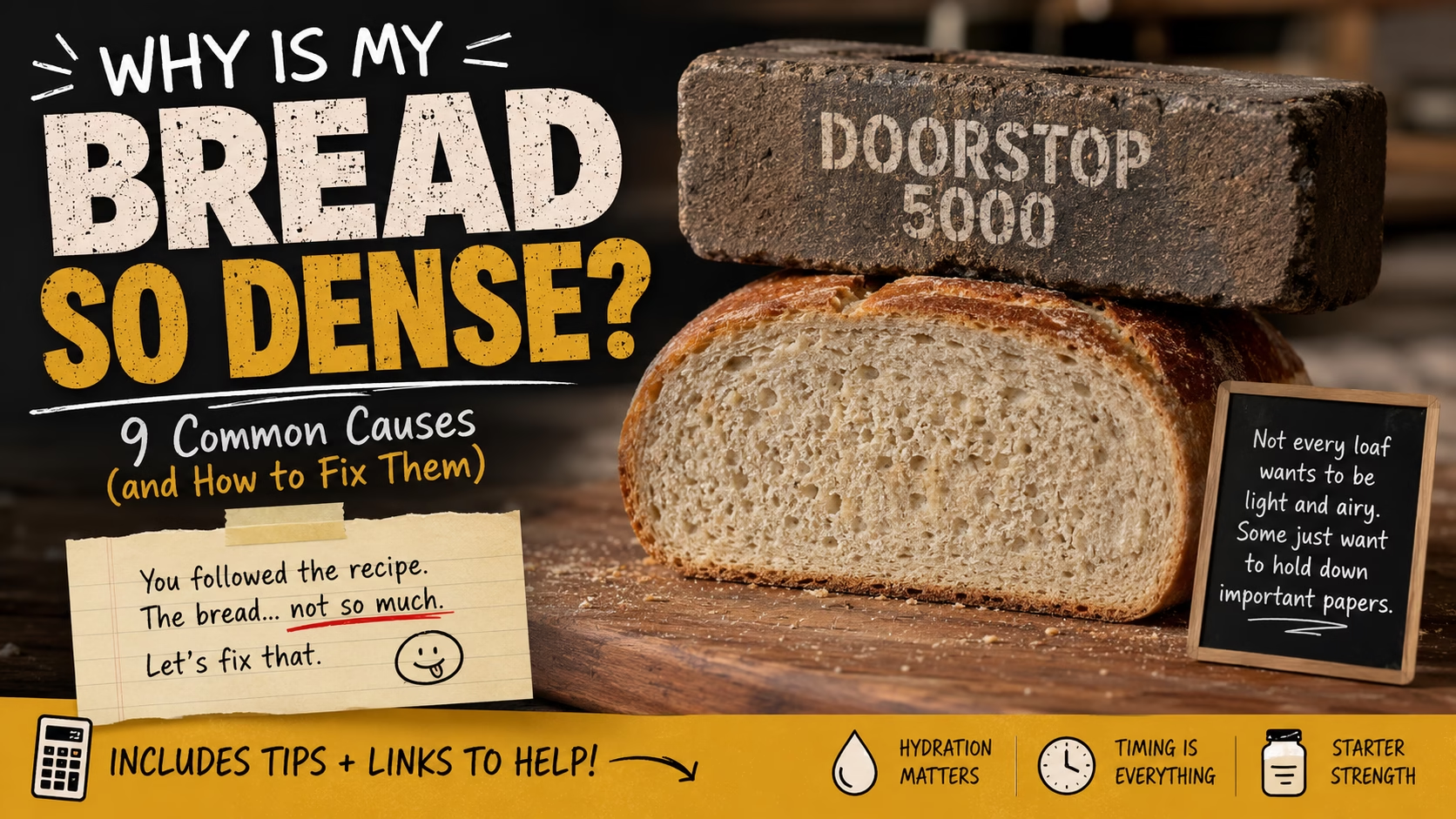
“Why is my bread dense?”
If your homemade bread could double as a doorstop, don’t worry—you’ve joined a very large club. Mine has qualified as building material more than once.
One of the reasons I built my bread calculators was because I got tired of asking the same question after another disappointing loaf:
“What on earth did I do wrong this time?”
The good news is that dense bread usually isn’t bad luck. It’s almost always one (or more) of a handful of common issues. Once you know what to look for, your bread gets dramatically better.
Let’s work through the usual suspects.
1. Your Dough Was Too Dry
This is probably the most common culprit.
When there’s not enough water in the dough, gluten can’t develop properly and the dough struggles to expand. The result is a loaf that’s heavy, tight, and more suitable for holding down important paperwork than making sandwiches.
Many beginning bread recipes accidentally become too dry because flour is measured by cups instead of weight. Depending on how tightly the flour is packed, one extra scoop can completely change the dough.
The fix:
Aim for an appropriate hydration level.
- Beginner sandwich bread: around 60–65%
- Rustic artisan bread: around 70–75%
Not sure what your recipe actually is? Plug the ingredients into my Bread Hydration Calculator and let it do the math.
2. You Added Too Much Flour
This sounds similar to the first problem, but it deserves its own mention.
We’ve all done it.
The dough feels sticky.
You add a little flour.
Still sticky.
Another handful.
Still sticky.
Five minutes later you’ve accidentally created edible drywall.
Bread dough is supposed to feel a little tacky. Resist the temptation to keep feeding it flour.
3. It Didn’t Rise Long Enough
Bread needs time.
Yeast doesn’t own a wristwatch.
Recipes that say “Rise for one hour” are really saying:
“Rise until it’s ready…which might take an hour.”
Temperature, humidity, yeast freshness, and flour all affect fermentation.
If your dough hasn’t expanded enough before baking, you’ll get a dense loaf every time.
4. You Let It Rise Too Long
Wait…
Didn’t I just tell you to let it rise longer?
Yes.
Bread is wonderfully inconsistent.
Over-proofed dough runs out of food and collapses before it reaches the oven. It may still bake, but it often produces a flat loaf with very little oven spring.
The goal isn’t a certain amount of time.
The goal is properly fermented dough.
5. Your Yeast Wasn’t Pulling Its Weight
Sometimes the yeast is simply old.
Sometimes it was stored improperly.
Sometimes it sat in the back of the pantry long enough to vote.
If you’re using commercial yeast and your dough barely rises, fresh yeast is one of the easiest things to check.
6. Your Gluten Didn’t Fully Develop
Gluten is the framework that traps all those lovely little bubbles produced during fermentation.
Without enough gluten development, those bubbles escape instead of lifting your loaf.
Fortunately, this usually has a simple solution:
- Knead a little longer.
- Or perform several stretch-and-fold sessions if making artisan bread.
Your dough should become smoother and more elastic as the gluten develops.
7. Your Oven Wasn’t Hot Enough
One of the biggest surprises for new bakers is just how much happens during the first ten minutes in the oven.
That burst of expansion is called oven spring.
If the oven isn’t fully preheated, the dough starts drying out before it has a chance to expand.
An inexpensive oven thermometer is one of the best baking investments you can make.
Mine informed me that my oven’s idea of 450°F was…creative.
8. Your Preferment Could Help
This isn’t always the cause of dense bread, but it can make a huge difference.
Using a poolish often produces:
- better flavor
- stronger gluten
- improved oven spring
- a lighter crumb
If you’ve never experimented with one, my Poolish Calculator can convert many standard yeast recipes into a poolish version without making your brain hurt.
It’s one of my favorite baking tricks.
9. Your Sourdough Starter Wasn’t Ready
Sourdough has a personality.
Sometimes a wonderful personality.
Sometimes the personality of a sleepy teenager on a Monday morning.
A weak starter doesn’t produce enough gas to lift the dough, leaving you with a loaf that’s disappointingly dense.
If you’re baking sourdough, make sure your starter is active, bubbly, and reliably doubles before mixing your dough.
My Sourdough Calculator also helps keep your hydration and starter percentages where you intended them to be—because sourdough already has enough variables without adding accidental math errors.
The Good News
Every baker makes dense bread.
Seriously.
The difference between beginners and experienced bakers isn’t perfection.
Experienced bakers have simply made enough mistakes to recognize them sooner.
If your latest loaf didn’t turn out the way you hoped, don’t toss the recipe.
Figure out which of these nine issues probably happened, make one adjustment, and bake it again.
That’s how we all get better.
And if the loaf still comes out dense…
Well, homemade croutons are delicious, and the birds are remarkably forgiving.
Happy baking!
If you’re curious about the science behind gluten development and fermentation, The Exploratorium’s bread science pages offer an easy-to-understand explanation.