
My mother baked these cookies throughout my childhood.
They were called Oat Flake Cookies.
She always said they came from the back of a box of Post Oat Flakes cereal.
Then one day...
the cereal disappeared.
the recipe disappeared.
the cookies disappeared.
Only the memory remained.
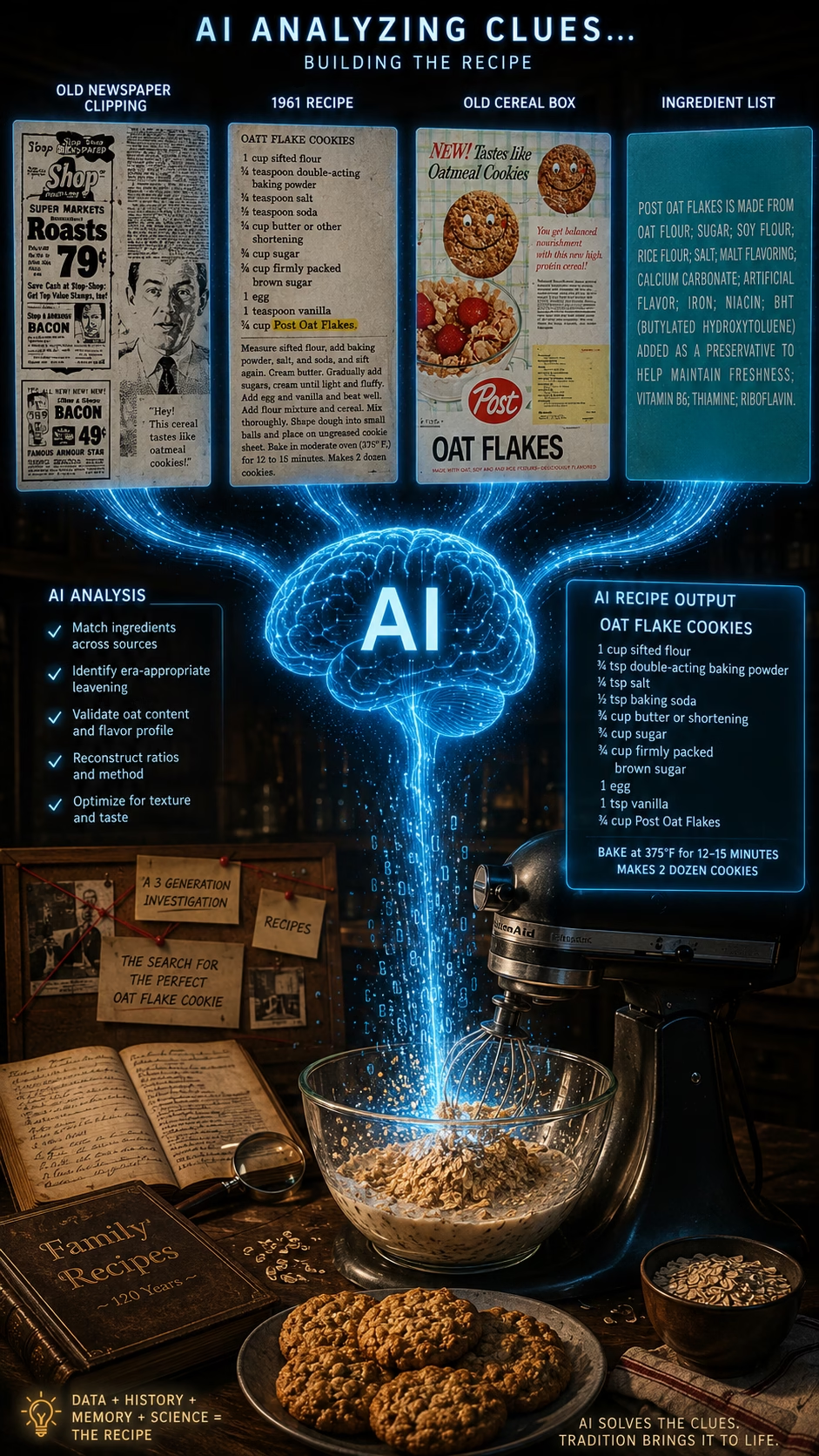
Chapter 5 — Experiment Zero
Version 0.1: The Special K Trial
After the evidence was gathered, the next step was not guessing. It was testing.
Post Oat Flakes no longer exist, so the question became simple: what modern cereal could provide a similar toasted grain flavor?
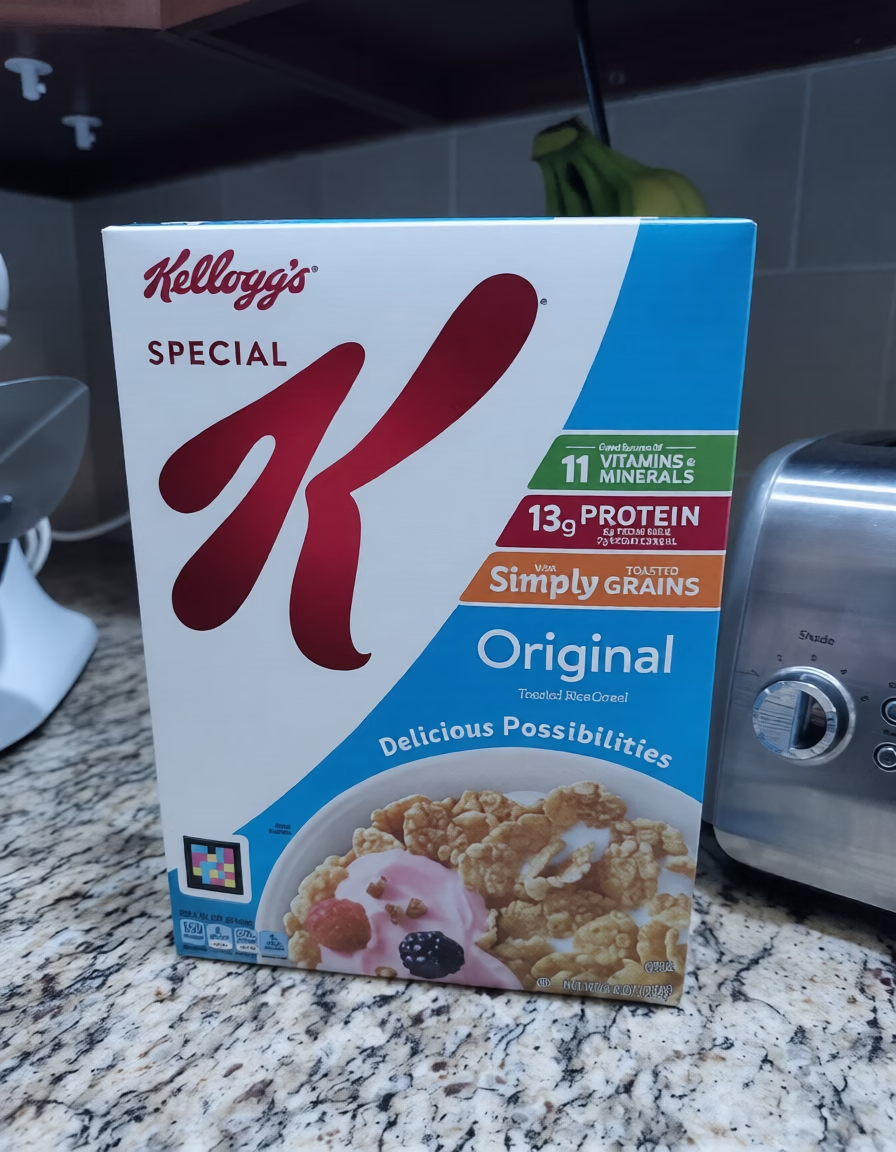
The answer, at least for the first trial, was Original Special K. It had the cereal flavor we needed, and more importantly, it brought a subtle malt note that seemed very close to the cookies I remembered from childhood.
This was not meant to be the final recipe. This was the first controlled experiment.
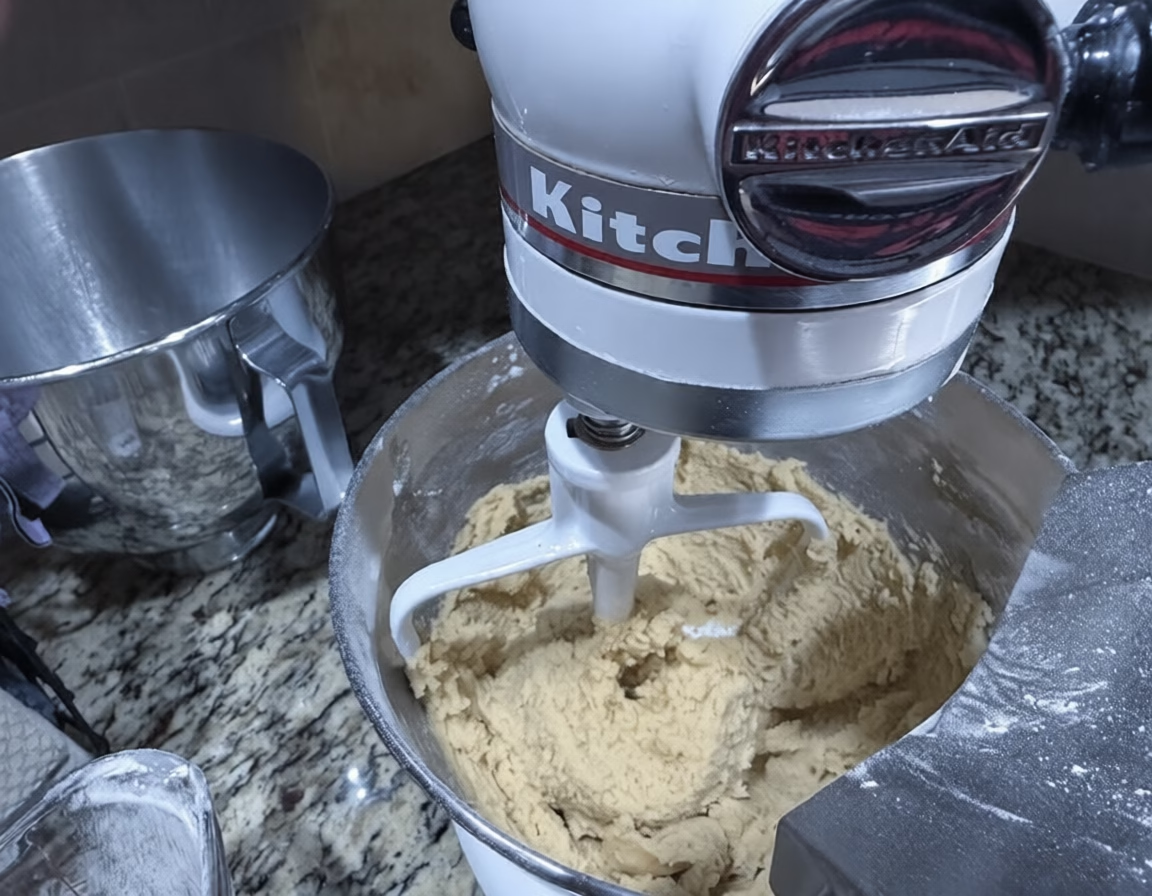
The dough came together beautifully. Butter, brown sugar, oats, and crushed Special K created a cookie that smelled familiar even before it went into the oven.
When the cookies came out, we had our first major breakthrough: the flavor was almost exactly right.
But the texture still needed work. Mom’s cookies were flatter, shinier, and more toffee-like on top. Version 0.1 solved the flavor mystery. Version 0.2 would have to solve the texture mystery.
Version 0.1 — Flavor nailed. Texture close. Case still open.
Chapter 7: New Evidence Arrives July 15, 2026
Just when I thought the investigation was over, the case took an unexpected turn.
When I published Aunt Rose’s page as part of the Family Cookbook Project, something wonderful happened. My cousin began opening boxes of her mother’s old recipe cards and sending me photographs of recipes I had never seen before.
Then one card stopped me cold.
Written across the top of the card
“Spiced Oat Flakes Cookies”
For decades I believed my mother’s Oat Flakes Cookie recipe had disappeared forever. Now an Oat Flakes Cookie recipe had surfaced in Aunt Rose’s own recipe box.
Was This My Mother’s Recipe?
I still cannot say for certain.
But I now know something I did not know when this investigation began: Aunt Rose and my mother, Mary, exchanged recipes.
One example is the family’s Pecan Dreams recipe. Grandma Busser copied it into her handwritten cookbook and credited it to my mother, Mary. Aunt Rose also preserved her own copy in her recipe collection.
That discovery does not prove the Oat Flakes recipe came from Mom. It does, however, make the possibility much more believable than it once seemed.
Evidence Item
Aunt Rose’s “Spiced Oat Flakes Cookies” Recipe Card
Found in Aunt Rose’s recipe collection in July 2026.
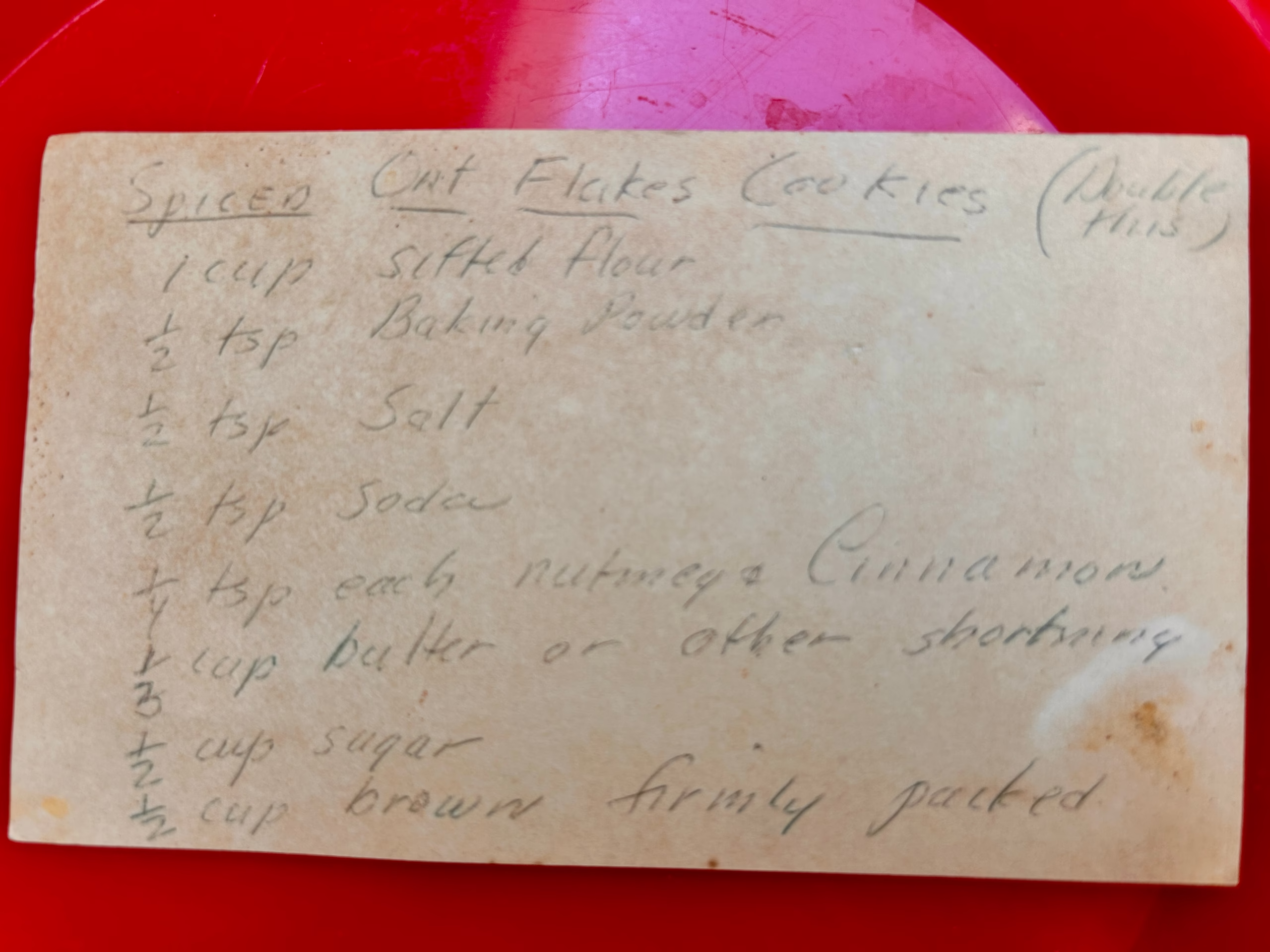
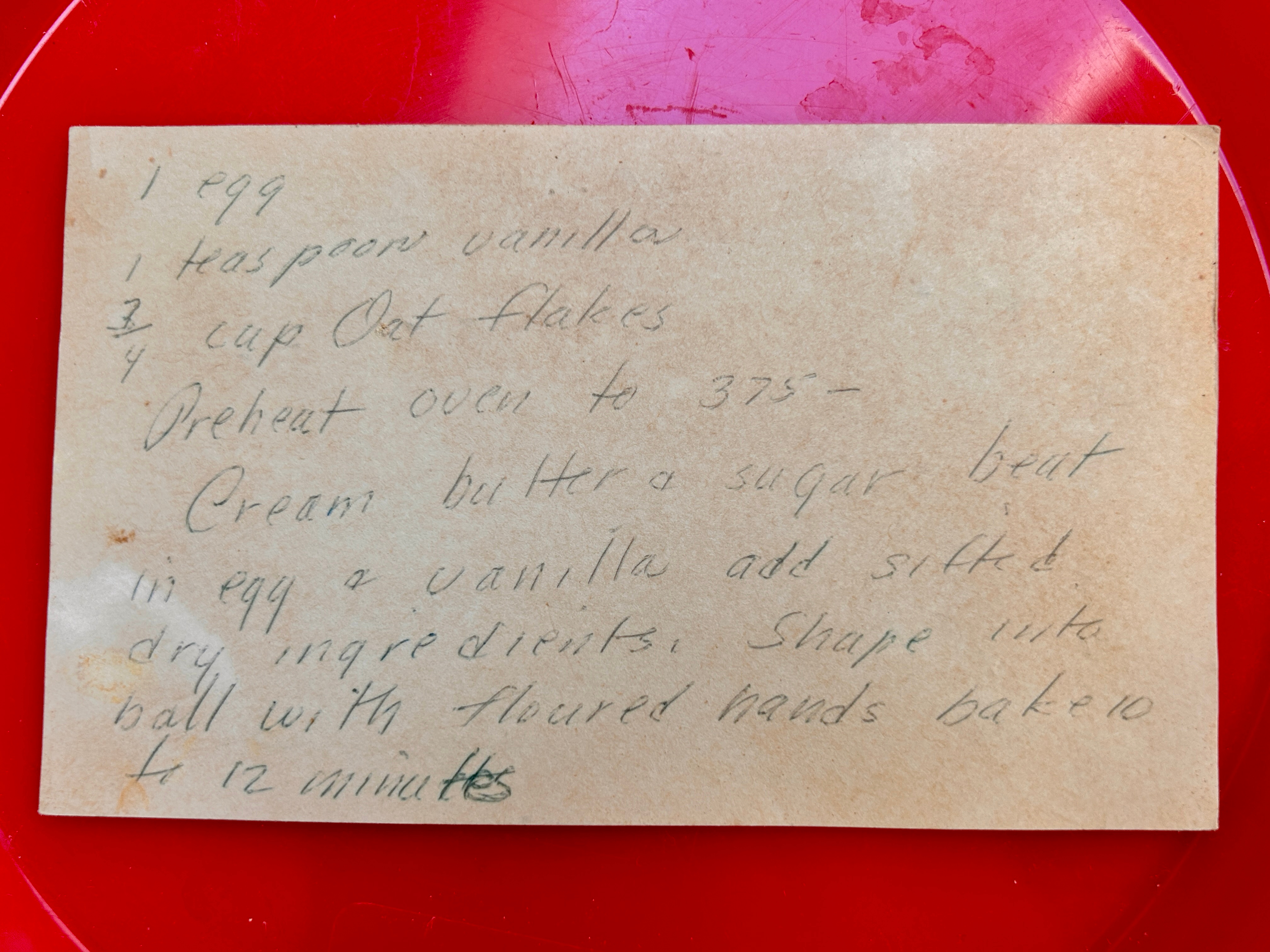
The Recipe as Written
Spiced Oat Flakes Cookies The card includes the note: “Double This”
Ingredients
- 1 cup sifted flour
- ½ teaspoon baking powder
- ½ teaspoon salt
- ½ teaspoon baking soda
- ¼ teaspoon each nutmeg and cinnamon
- ⅓ cup butter or other shortening
- ½ cup sugar
- ½ cup brown sugar, firmly packed
- 1 egg
- 1 teaspoon vanilla
- ¾ cup Oat Flakes
Directions
- Preheat oven to 375°F.
- Cream butter and sugars.
- Beat in the egg and vanilla.
- Add the sifted dry ingredients.
- Shape the dough into balls with floured hands.
- Bake for 10 to 12 minutes.
Comparing the Evidence
Months earlier, I had located a faded 1961 advertisement containing the original Post Oat Flakes cereal-box recipe. That recipe became one of the clues we used while trying to reconstruct the cookies from memory.
Only after Aunt Rose’s handwritten card surfaced did I realize something remarkable:
The two recipes are almost identical.
| Ingredient or Direction | 1961 Post Recipe | Aunt Rose’s Card |
|---|---|---|
| Flour | 1 cup | 1 cup |
| Baking powder | ½ teaspoon | ½ teaspoon |
| Salt | ½ teaspoon | ½ teaspoon |
| Baking soda | ½ teaspoon | ½ teaspoon |
| Butter or shortening | ⅓ cup | ⅓ cup |
| White sugar | ¾ cup | ½ cup |
| Brown sugar | ¾ cup | ½ cup |
| Egg | 1 | 1 |
| Vanilla | 1 teaspoon | 1 teaspoon |
| Oat Flakes cereal | ¾ cup Post Oat Flakes | ¾ cup Oat Flakes |
| Cinnamon and nutmeg | None | ¼ teaspoon each |
| Oven temperature | 375°F | 375°F |
| Baking time | 12 to 15 minutes | 10 to 12 minutes |
Only Three Meaningful Ingredient Changes
- White sugar was reduced from ¾ cup to ½ cup.
- Brown sugar was reduced from ¾ cup to ½ cup.
- ¼ teaspoon each of cinnamon and nutmeg was added.
This is not simply another cookie recipe that happens to use Oat Flakes. It appears to be a lightly modified version of the original 1961 Post recipe.
That realization also put our earlier experiments into a new light. Before this handwritten card was found, we had already concluded that the cereal itself—not rolled oatmeal—was the defining ingredient. We had also found that butter and the malt flavor of Original Special K brought us remarkably close to the cookies I remembered.
Aunt Rose’s card did not make the reconstruction meaningless. It showed that many of the clues we had followed were leading in the right direction.
Who Changed the Recipe?
Was Aunt Rose simply copying the cereal-box recipe and changing it to suit her own taste?
Or did my mother give Rose the version she actually baked—less sugar, a little cinnamon, and a little nutmeg?
I do not know. The handwriting alone cannot tell us who made those changes. What we do know is that Rose and Mary exchanged recipes, and that someone in the family adapted the original Post recipe before it was preserved on this card.
What the Evidence Suggests
The 1961 Post recipe appears to have been the starting point. Aunt Rose’s card preserves a family variation with less sugar, added cinnamon and nutmeg, and a slightly shorter baking time.
Where Does That Leave the Case?
The journey began with a forty-year-old memory of a flat, chewy cookie with a toffee-like top. It led through faded advertisements, discontinued cereal, ingredient research, Special K experiments, and more than one batch of cookies.
Now the search has come full circle.
We have the original 1961 cereal-box recipe—and a handwritten family variation preserved in Aunt Rose’s recipe box more than sixty years later.
There is only one thing left to do.
Bake Aunt Rose’s version exactly as written—and see whether the cookies tell us the rest of the story.
The case is not closed. It has simply reached the most important bake yet.
The Final Bake
Finding Aunt Rose’s handwritten recipe was an extraordinary clue. But a recipe card alone could not close the case. There was only one test that mattered: bake the cookies and see what happened.
For weeks, the investigation had relied on childhood memories, old cereal advertisements, a recipe printed on a 1961 Post Oat Flakes box, and a series of experiments using modern ingredients. Then my cousin discovered Aunt Rose’s handwritten Spiced Oat Flake Cookies recipe.
Because Post Oat Flakes disappeared decades ago, I substituted Original Kellogg’s Special K. Special K had already provided the malt flavor that made the earlier experimental batches taste surprisingly close to the cookies I remembered.
This time, however, I followed Aunt Rose’s family recipe rather than trying to reconstruct the cookie from memory.
Investigation Notes
No pressing. No oatmeal. Natural spread.
The finished dough was soft, grainy, and slightly crumbly. I rolled it into balls and placed them directly on the baking stone without flattening them.
In the oven, the cookies spread naturally into thin rounds. That was an immediate and important match to my memory. My mother’s cookies were never thick oatmeal cookies, and they did not need to be pressed flat before baking.
The second tray was baked for 15 minutes and then allowed to remain on the hot baking stone for another 10 minutes after being removed from the oven. That retained heat helped finish the cookies gently and produced the surface I had been trying to recreate from the beginning.
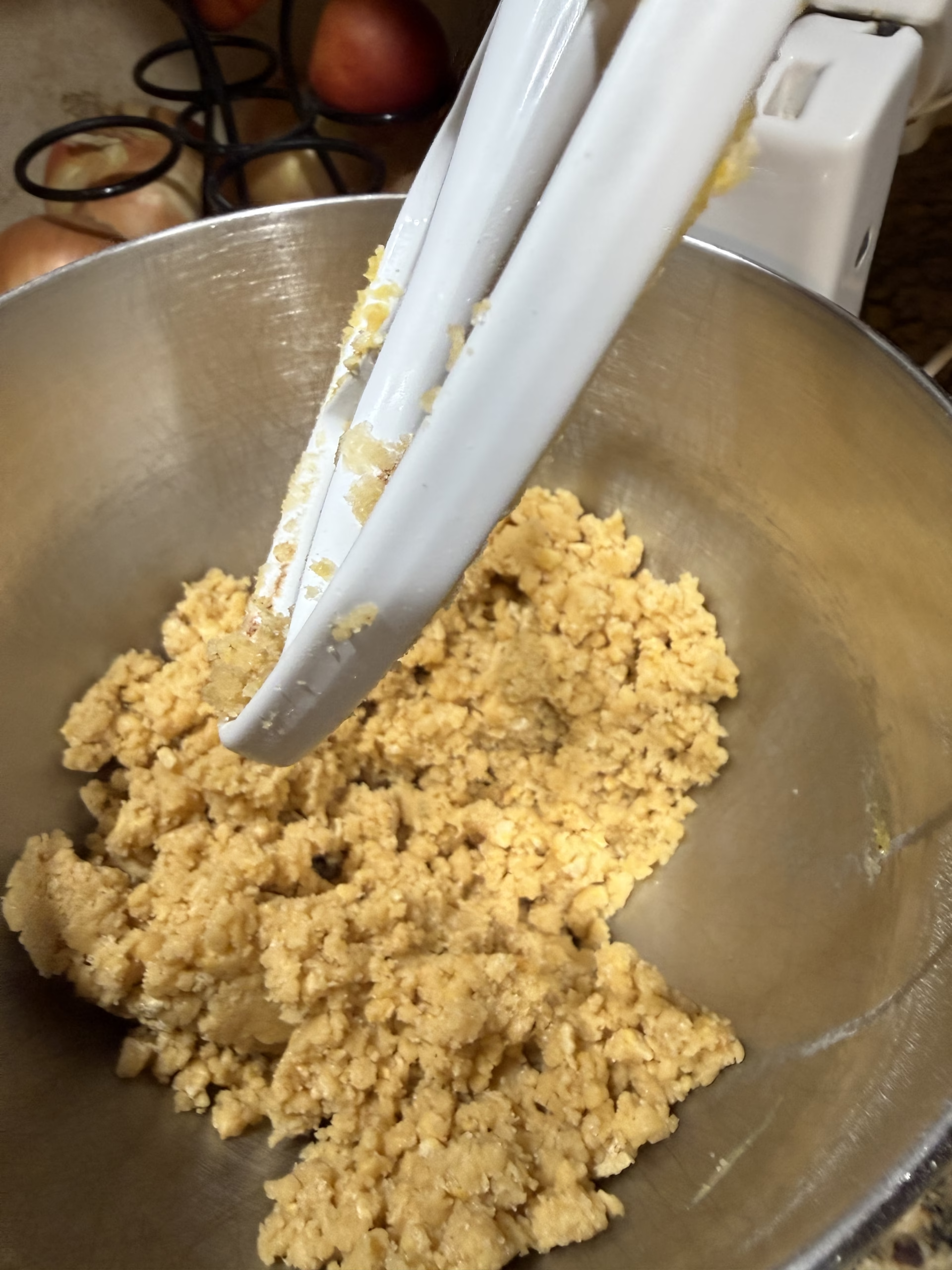
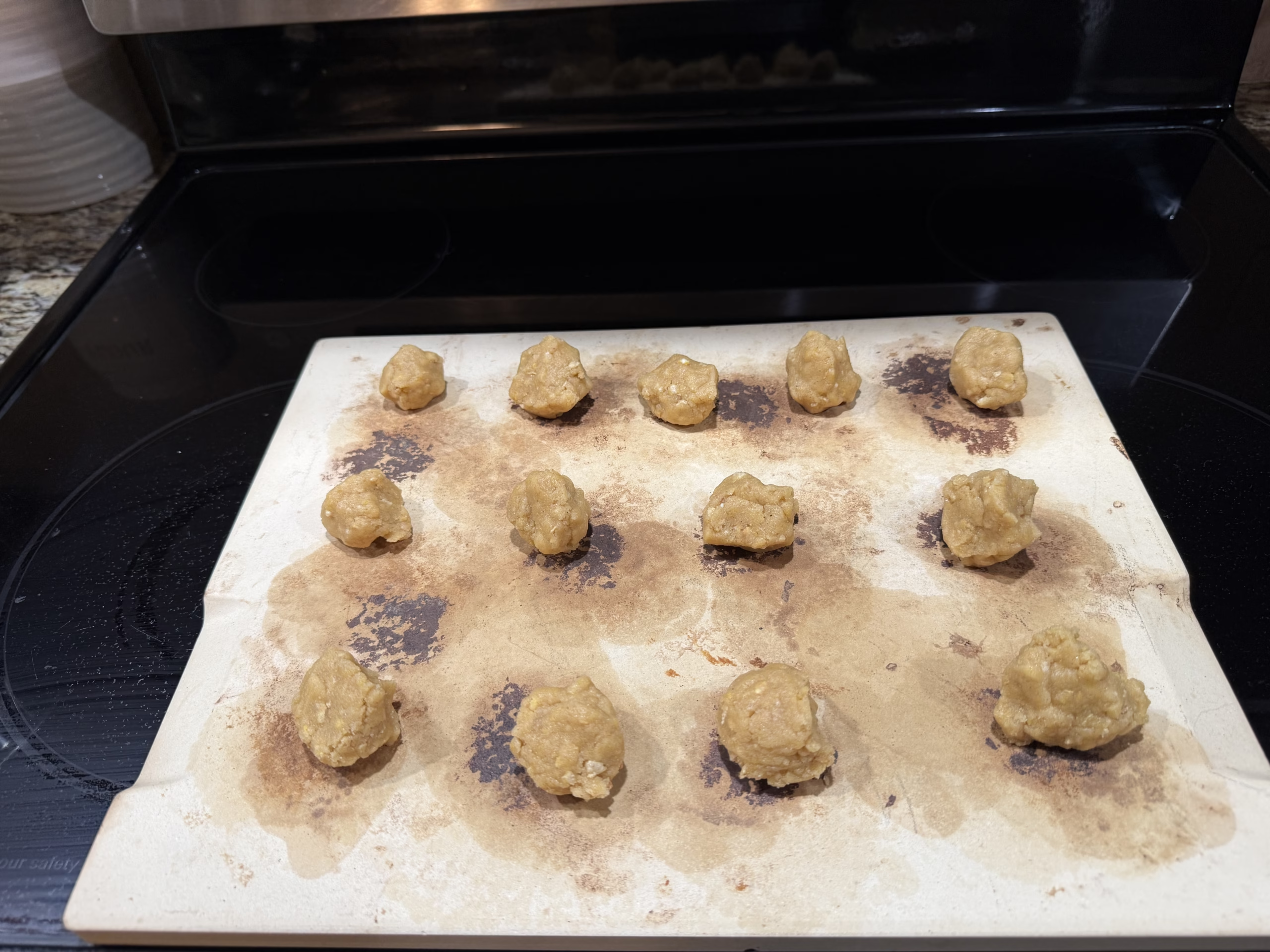
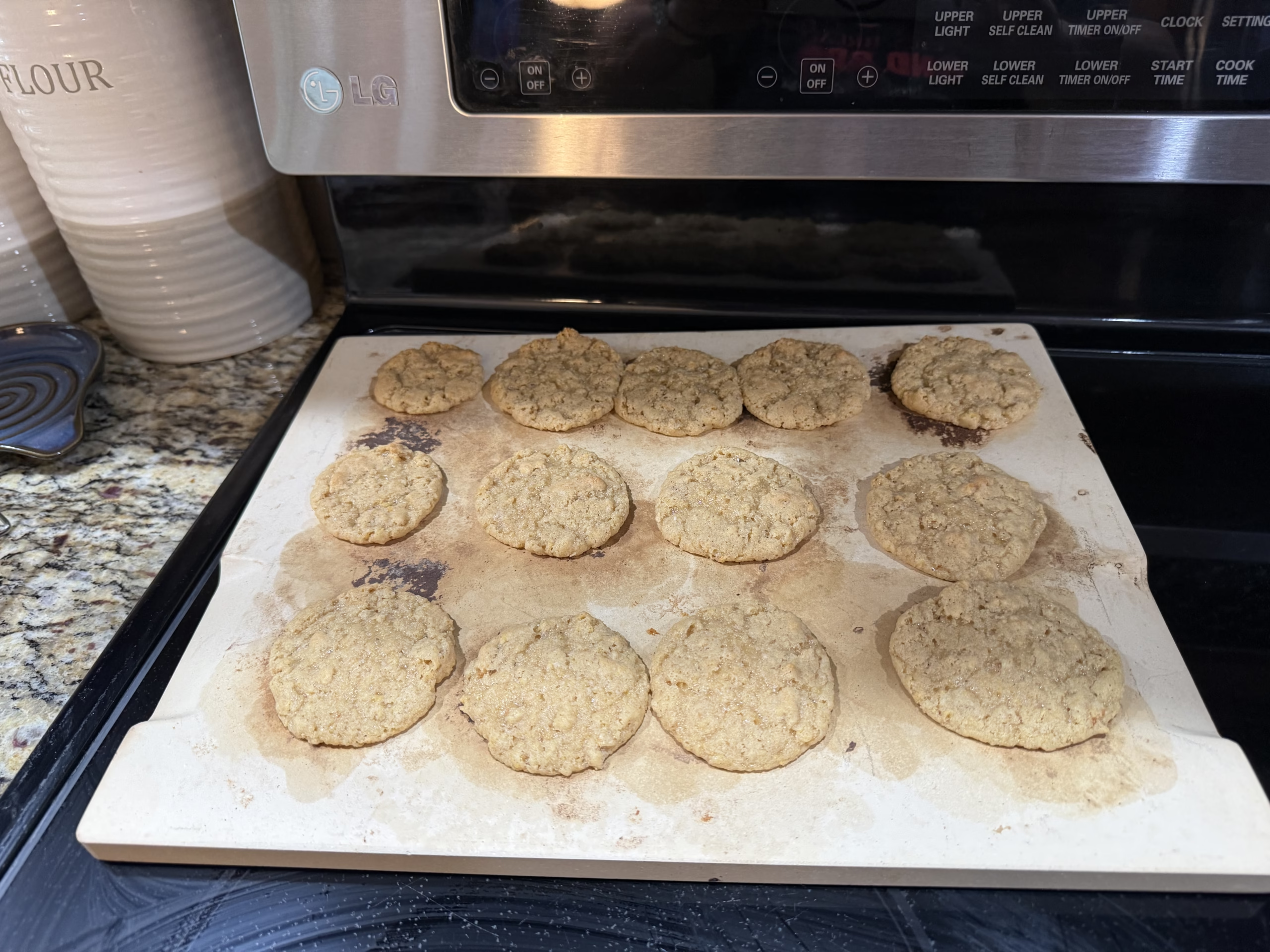
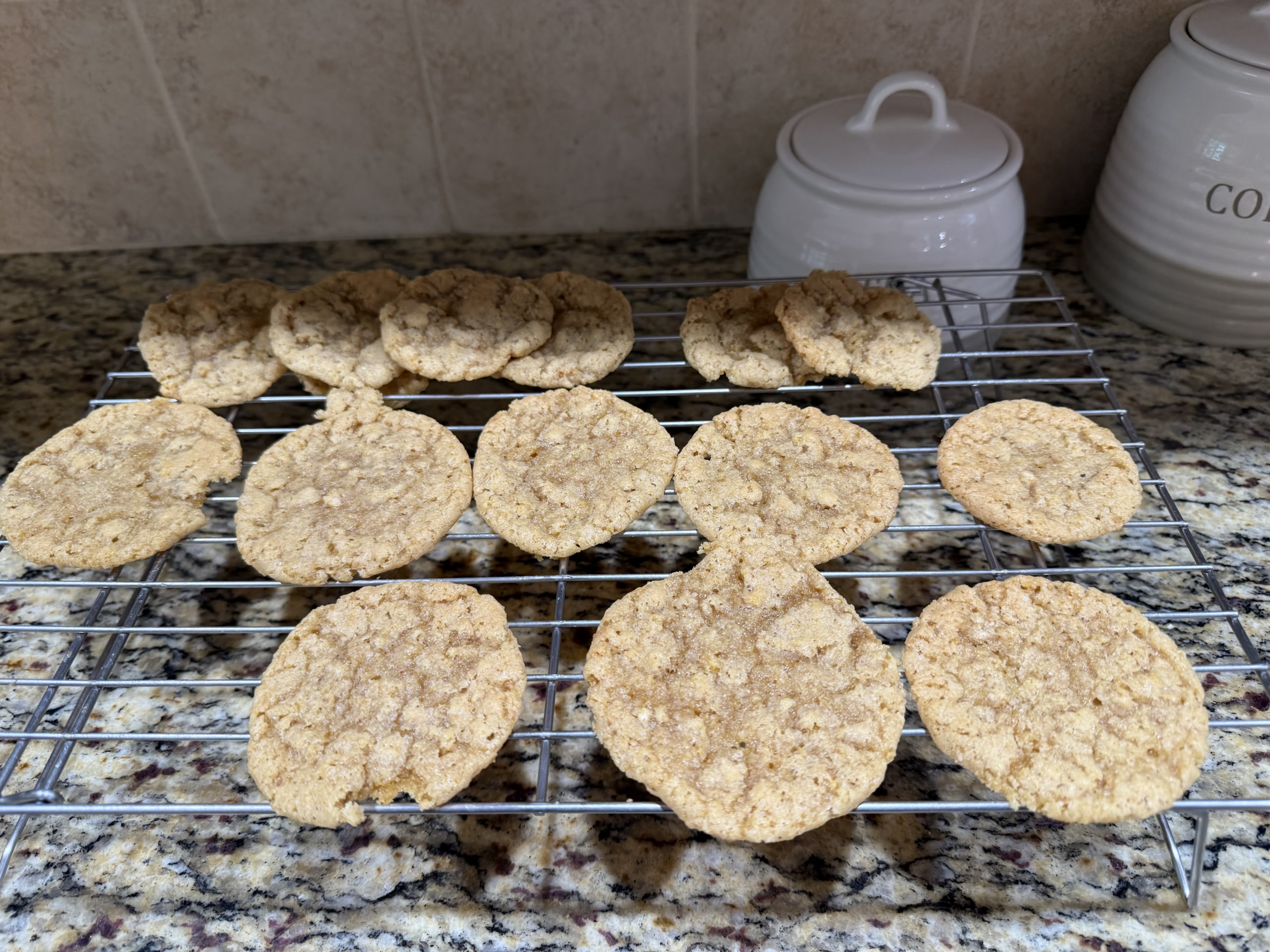
What the Final Cookies Revealed
For the first time in the investigation, the cookies matched nearly every physical characteristic I had described from memory.
-
Thin without being pressed
The dough balls spread naturally in the oven. -
Extremely chewy
The centers bent rather than snapping apart. -
Irregular, topographical surface
The tops formed cracks, ridges, and shallow valleys. -
Toffee-like shine
Glossy caramelized areas appeared between the crevices. -
Light golden color
The cookies browned gently without becoming dark or crisp. -
Flavor remarkably close to memory
The malt, butter, brown sugar, cinnamon, and nutmeg came together in a familiar way.
The Last One Percent
The texture, chew, thinness, appearance, and overall flavor were approximately 99 percent of the way there. The only noticeable difference was that this batch seemed just a little sweeter than the cookies I remember.
That slight difference may not come from Aunt Rose’s recipe. Her handwritten version already uses less white and brown sugar than the original 1961 cereal-box recipe.
The more likely explanation is the modern cereal substitution. Special K contributes malt flavor, which helped solve an important part of the mystery, but it may also be slightly sweeter than the long-discontinued Post Oat Flakes. The absence of actual oat content may also allow the sugar and malt flavors to stand out more strongly.
Reducing the recipe’s sugar could reduce the sweetness, but it could also change the natural spread, chewiness, caramelization, and glossy surface that finally matched the original cookies. For now, the recipe remains unchanged.
Aunt Rose’s recipe appears to be the missing family recipe.
After months of research and experimentation, the handwritten card produced the thinness, natural spread, deep chew, irregular surface, and caramel-like shine remembered from childhood.
The results also support the conclusion that my mother, Mary, and her sister-in-law Rose shared recipes. The formula may have begun with the 1961 Post Oat Flakes box, but the cinnamon, nutmeg, and reduced sugar turned it into the version preserved in our family.
The lost cookie was waiting in Aunt Rose’s recipe box.
The mystery began with a childhood memory and a discontinued box of cereal. It continued through vintage advertisements, historical recipes, AI-assisted research, modern substitutions, and multiple experimental batches.
The final piece of evidence did not come from another search or another theory. It came from a handwritten card saved by family.
Sometimes a missing recipe is not truly lost. It is simply waiting to be discovered in someone else’s recipe box.
AI helped follow the clues, but family history provided the answer.